
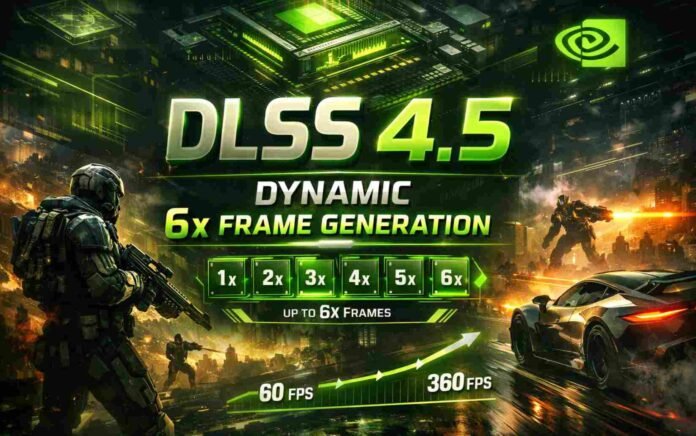
- DLSS 4.5 introduces a new transformer model focused on cleaner image quality
- Dynamic 6x frame generation aims to push frame rates toward high refresh limits
- Advanced frame generation is exclusive to RTX 50 series GPUs
- Nvidia continues shifting gaming performance from hardware to AI software
NVIDIA is preparing to unveil the next step in its DLSS evolution, and the direction is unmistakable. More AI. More generated frames. Less emphasis on traditional rendering horsepower.
At CES 2026, the company is expected to announce DLSS 4.5, a new version of its deep learning super sampling technology that leans harder than ever into frame generation rather than raw performance gains.
At the center of the update is a new second-generation transformer-based AI model. Nvidia claims it has been trained on a broader and more diverse dataset, with the goal of cleaning up long-standing issues such as ghosting, shimmering edges, and inconsistent anti aliasing.
These problems have followed DLSS across multiple versions, particularly when frame generation is enabled. Nvidia believes the new model can finally smooth those rough edges while maintaining the visual clarity gamers expect.
But the headline feature is not image quality. It is scale.
Dynamic 6x Frame Generation Explained
DLSS 4.5 introduces dynamic multi frame generation with support for up to six AI generated frames for every traditionally rendered one. In simple terms, the GPU renders a single real frame, then the AI system fills in up to six additional frames in between.
The goal is to dramatically inflate frame rates, potentially pushing games toward a monitor’s maximum refresh rate even when native performance falls short.
Nvidia is positioning this feature as a solution for high refresh displays, particularly 240Hz panels that are becoming more common among enthusiasts.
Rather than being locked to a fixed multiplier, the system can dynamically adjust how many AI frames are inserted based on performance headroom and display requirements. In theory, that flexibility could make the technology more usable than previous fixed frame generation modes.
That flexibility matters because earlier implementations have not been universally loved. Frame generation debuted with the RTX 40 series as a clever way to boost smoothness, but it was never a free win.
It worked best when the base frame rate was already strong, and even then it introduced latency and occasional visual artifacts. When Nvidia expanded the idea with multi frame generation on the RTX 50 series, those issues became more pronounced.
More AI frames meant more opportunities for errors, more interpolation mistakes, and a growing sense that the technology was compensating for performance rather than enhancing it.
A six times version risks amplifying all of those concerns.
Compatibility and Hardware Limits
Not all of DLSS 4.5 is locked behind new hardware. Nvidia says the updated transformer model will run on RTX 20, 30, 40, and 50 series cards, meaning a wide range of users should benefit from improved image reconstruction and anti aliasing. That is the most consumer friendly part of the announcement.
The advanced frame generation features are another story. Dynamic frame generation and the new 6x mode will be exclusive to RTX 50 series GPUs, and they will not be available immediately. Nvidia plans to roll them out later in the spring, suggesting that the company is still refining the technology and preparing game level integrations.
This split approach highlights Nvidia’s broader strategy. Image quality improvements are used to keep older hardware relevant, while headline performance features are reserved for the latest cards. It is a familiar playbook, but one that increasingly shifts the burden of performance from silicon to software.
What This Says About Nvidia’s Direction
DLSS 4.5 reinforces a trend that has been building for years. Nvidia is no longer chasing performance solely through brute force. Instead, it is betting that AI driven rendering can bridge the gap between what hardware can realistically deliver and what modern displays demand.
That approach has advantages. It allows Nvidia to extract more perceived performance from each generation, reduce the need for massive power increases, and align gaming technology with its broader AI ambitions.
It also has drawbacks. Frame generation does not improve responsiveness, and no amount of interpolation can fully replace genuinely rendered frames. For competitive players, latency remains a deal breaker. For purists, AI generated motion still feels like a compromise.
With the CES keynote approaching, more details are likely to emerge, including demonstrations and developer feedback. What seems certain is that native rendering performance is no longer the centerpiece of Nvidia’s gaming narrative. AI is.
And one thing appears to be missing from the conversation entirely. Do not expect to hear about refreshed RTX 50 Super GPUs anytime soon.
Follow TechBSB For More Updates