
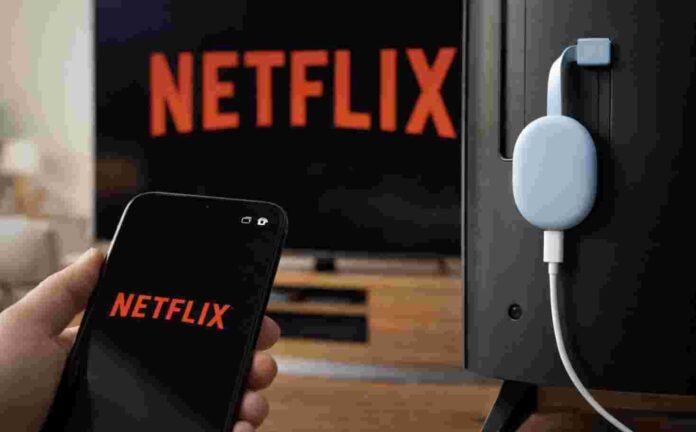
- Netflix has reduced Google Cast support in its mobile apps for many users.
- A report suggests casting usage may be low, possibly around 10% for some services.
- Google says it is still investing in Google Cast and hints at more updates coming.
- Casting is still relevant, and future standards like Matter Casting could expand options.
Netflix has quietly rolled back Google Cast support in its mobile apps, and while the company has stayed silent on the reasoning, a new report suggests the decision may come down to one simple factor: not enough people were using it.
At CES 2026, a representative from one streaming service reportedly revealed that only around 10% of Android users were regularly using casting to send content from their phone to a bigger screen. It is not confirmed that this figure applies directly to Netflix, but it paints a believable picture of the wider trend. Casting is no longer the default way most people watch TV, and Netflix appears to be adjusting its priorities accordingly.
That shift matters, because Google Cast has long been one of the easiest ways to turn a phone into a remote control. You tap the Cast icon, choose a device, and your movie or show pops up on the TV with minimal fuss.
For years, it was a standout feature for Chromecast owners and Android users in general. Now, for a large chunk of Netflix subscribers, it is effectively gone.
What changed and who still has it
The removal is not absolute, but it is noticeable. Casting still works in certain situations, including for some users who are not on ad supported plans and for older Chromecast hardware that does not come with a remote. But for modern setups and for most viewers, the familiar casting option is no longer available inside Netflix in the way it used to be.
Netflix has not released a formal explanation, which has left plenty of room for speculation. One theory is that Netflix is simply focusing on where the majority of its audience actually watches.
Today, smart TVs and streaming devices ship with Netflix pre installed or just a click away. Many people do not need to cast from a phone because the Netflix app is already sitting on their home screen.
That is especially true for households with Google TV, Roku, Fire TV, Apple TV, or smart TV platforms from Samsung and LG. The experience is designed to be direct. You open the app on the TV and hit play. Casting, while still useful, becomes more of a backup option than a daily habit.
Why Netflix may have decided it was not worth the hassle
There is also the issue of complexity. Supporting casting is not just a switch you keep turned on. It requires ongoing maintenance, testing, and compatibility work across multiple phone models, Android versions, TV platforms, and Chromecast generations.
According to the report, one “best guess” is that Netflix is prioritizing newer initiatives such as cloud gaming and interactive experiences like voting features. Those kinds of projects demand engineering time, app space, and long term support. If casting usage is slipping, Netflix may have decided it was a feature with diminishing returns.
From a product strategy point of view, it is an understandable move. Streaming apps are no longer competing only on video quality and content libraries. They are competing on performance, responsiveness, personalization, and new engagement tools. Every feature has a cost, and Netflix may have concluded that casting was no longer pulling its weight.
Still, that does not make the change any less frustrating for people who rely on it. Casting remains one of the easiest ways to watch while traveling, staying in hotels, or visiting friends and family. It is also a convenient workaround when a TV app is slow, outdated, or poorly supported.
Google is not backing away and the future may get even bigger
Netflix stepping back does not mean casting is fading out completely. Google has made it clear it still considers Google Cast a key experience. Google executive Neha Dixit has been quoted as saying the company continues to invest in the technology, and that users should stay tuned for more developments this year.
That support matters, because Google Cast is bigger than any single app. It is built into Android, it is widely adopted by smart TVs and speakers, and it remains one of the simplest ways to connect screens without signing into accounts on unfamiliar devices.
Interestingly, around the same time Netflix reduced casting functionality, Apple added Google Cast support to the Apple TV app on Android. That move sends a strong signal that other services still see value in casting, especially for users who prefer phone based control or want a quick way to watch on a larger display.
Looking further ahead, there is also Matter Casting, which is currently in development as part of the Matter smart home standard. Amazon is among the companies backing it, and the goal is to create a more universal approach to casting across devices and ecosystems. If it lands smoothly, it could make casting even more consistent and less dependent on the choices of individual app makers.
Whether Netflix chooses to embrace that next generation of casting is another question. For now, the company appears to be betting that most viewers will simply watch directly through their TV apps and move on.
Follow TechBSB For More Updates

