
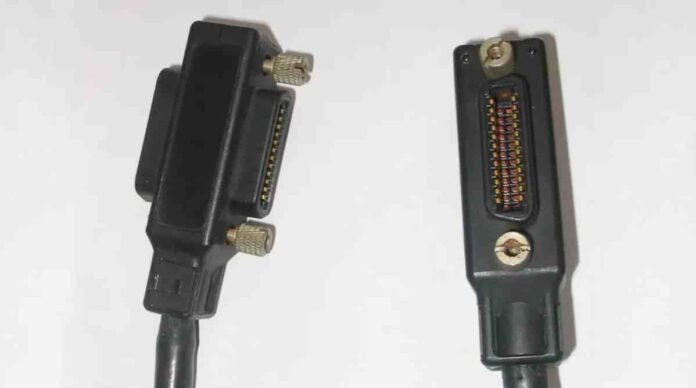
- GPIB was introduced by HP in 1972 and standardized as IEEE 488
- Linux 6.19 promotes GPIB drivers from staging to stable mainline support
- The bus still delivers up to 8MB per second, sufficient for lab instruments
- Stable Linux support extends the useful life of legacy scientific hardware
Some technologies never really die. They just wait patiently until the software world catches up. That is exactly what has happened with HP’s General Purpose Interface Bus, better known today as IEEE 488.
Introduced in 1972 by Hewlett-Packard, the interface has finally received stable, long term Linux driver support more than half a century later.
With the inclusion of a fully supported GPIB driver in Linux 6.19, the bus has moved out of the kernel’s staging area and into its mainline core. That transition matters.
It signals that the driver is no longer experimental, is expected to meet kernel quality standards, and will be maintained going forward. For labs and engineers still relying on decades old test equipment, this is not nostalgia. It is practical progress.
Why GPIB Mattered Then and Still Does Now
When HP designed GPIB, computing looked very different. Intel’s 8008 processor was brand new, personal computers had not yet entered homes, and most laboratory automation involved custom wiring and proprietary interfaces.
GPIB changed that by offering a standardized, parallel communication bus that could connect multiple instruments to a single controller.
The design allowed up to 15 devices on one bus, with a maximum cable length of roughly 20 meters. Data rates topped out at 8 megabytes per second, which was impressive for the early 1970s and remains more than adequate for oscilloscopes, signal generators, multimeters, and spectrum analyzers today.
Measurement equipment does not usually need high throughput. It needs reliability, predictable timing, and compatibility across generations.
Those qualities explain why GPIB spread far beyond HP’s own products. It became a fixture in laboratories, universities, and industrial test setups worldwide.
It even made its way into early home computing, appearing on systems like the Commodore 64 and Acorn machines to connect disk drives and peripherals. Few interfaces can claim such a broad and long lived footprint.
From Staging to Stable in Linux 6.19
Linux has technically supported GPIB for years, but only in a limited sense. The driver lived in the staging tree, which is where incomplete or experimental code resides.
Staging drivers can break, disappear, or change APIs without warning. For organizations that value stability, that status often makes adoption a non starter.
That changed with Linux 6.19. The GPIB subsystem has now been promoted to full kernel status, meaning it is considered production ready.
The move was confirmed by Greg Kroah-Hartman, one of the most influential figures in kernel development, who noted that both the gpib and vc04 subsystems were mature enough to leave staging.
This promotion ensures that the driver will receive ongoing maintenance, testing, and compatibility updates as Linux evolves. For anyone running modern distributions in research or industrial environments, that assurance is crucial.
It also means vendors and integrators can confidently deploy Linux based systems without worrying that a future kernel update will break communication with legacy instruments.
Practical Impact for Labs and Engineers
The most striking part of this update is not the performance numbers. GPIB still tops out at the same 8MB per second it offered decades ago. What matters is continuity.
Many laboratories operate instruments that cost tens or hundreds of thousands of dollars when new and still perform their measurement tasks flawlessly. Replacing them simply to gain USB or Ethernet connectivity rarely makes financial sense.
Stable Linux support allows these instruments to integrate cleanly into modern workflows. Engineers can automate tests, log data, and interface with contemporary analysis tools without relying on fragile third party drivers or USB to GPIB adapters with questionable support.
It also opens the door to long term archival and reproducibility, since Linux systems can be maintained for decades with predictable behavior.
There is also a broader lesson here. Software longevity often determines hardware longevity. By adding first class support for a 53 year old interface, the Linux kernel once again demonstrates why it is trusted in environments where stability matters more than novelty.
Follow TechBSB For More Updates