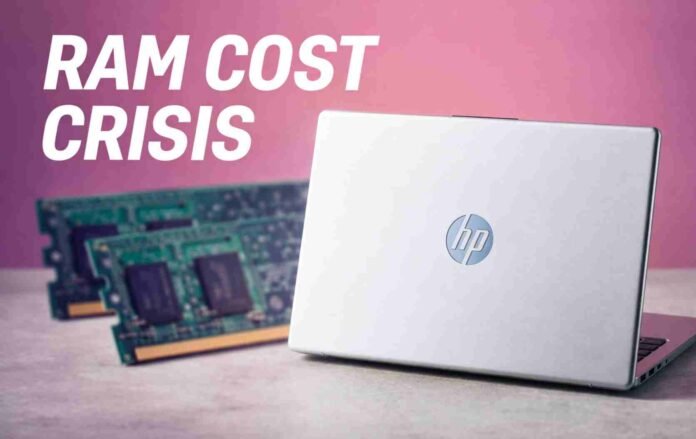
- HP says RAM now accounts for 35 percent of a PC’s build cost, up from 15 to 18 percent.
- The spike is largely driven by rising DDR5 prices and supply constraints.
- HP is securing new suppliers and inventory but expects pressure to continue.
- Consumers may see higher prices or more 8GB base configurations.
HP has laid bare just how severe the memory crunch has become. In its Q1 2026 earnings call, the company revealed that system RAM now accounts for roughly 35 percent of the total cost of building a PC.
Only a few quarters ago, that figure sat between 15 and 18 percent. In simple terms, the memory portion of HP’s bill of materials has nearly doubled.
That is not a subtle shift. When a single component category jumps from less than a fifth of production cost to more than a third, it reshapes product planning, pricing strategy, and profit margins overnight.
For a company of HP’s scale, the implications are enormous. For consumers, it likely means higher prices or tougher compromises in specifications.
A Perfect Storm for DDR5 Pricing
The memory squeeze has been building for months, particularly around DDR5. Production constraints, shifting fab priorities, and supply chain recalibrations have pushed module prices steadily upward. What we are seeing now is the result of that sustained pressure finally reaching breaking point for major PC manufacturers.
HP’s interim CEO Bruce Broussard acknowledged the strain but emphasized that the company is not standing still. HP has long term supply agreements in place for 2026, has qualified additional suppliers, and has strategically increased inventory for key platforms.
It has also shortened the time required to validate new materials, giving it more flexibility to adjust product configurations quickly.
Those measures suggest HP anticipated turbulence, but even careful planning cannot fully insulate a PC maker when memory pricing accelerates this sharply. RAM is not a peripheral component.
It is fundamental to every system configuration, from entry level notebooks to premium workstations. When its cost spikes, there is no easy workaround.
Pressure on Pricing and Configurations
The most telling comment from HP’s leadership may have been about shaping demand to align with available supply. In practice, that could mean pushing more systems with lower memory configurations into the mainstream.
An 8GB laptop is still viable for basic productivity and web use, but it is increasingly tight for modern multitasking. Many consumers now view 16GB as the comfortable baseline for longevity.
If RAM prices remain elevated, manufacturers may lean harder on entry level configurations to keep sticker prices from climbing too aggressively.
That balancing act is delicate. Raise prices too quickly and demand cools. Hold prices steady while component costs surge and margins suffer. For a company competing in a crowded global PC market, neither option is ideal.
HP’s position also matters because of its scale. As one of the world’s largest PC manufacturers, its cost structures often signal broader industry trends. If HP is feeling this level of pressure, smaller OEMs are likely under even greater strain.
The Broader Industry Impact
This situation does not exist in isolation. Other major PC brands have already warned of price increases driven by memory costs. The ripple effects extend beyond consumer laptops to enterprise deployments, education contracts, and even custom desktop builds.
There is also growing speculation about alternative supply sources. Chinese memory manufacturers have been expanding capacity and visibility, and large OEMs may increasingly explore diversified sourcing to stabilize costs. Whether that can meaningfully ease the pressure in 2026 remains uncertain.
For now, the trajectory appears upward. HP has indicated that memory’s share of build cost could climb further as the year progresses. That is a sobering outlook. When one component begins consuming more than a third of total manufacturing cost, product strategy inevitably shifts around it.
The RAM crisis is no longer a background supply chain story. It is front and center in boardrooms, earnings calls, and pricing sheets. And if current trends persist, consumers may soon feel the full weight of it at checkout.
Follow TechBSB For More Updates