
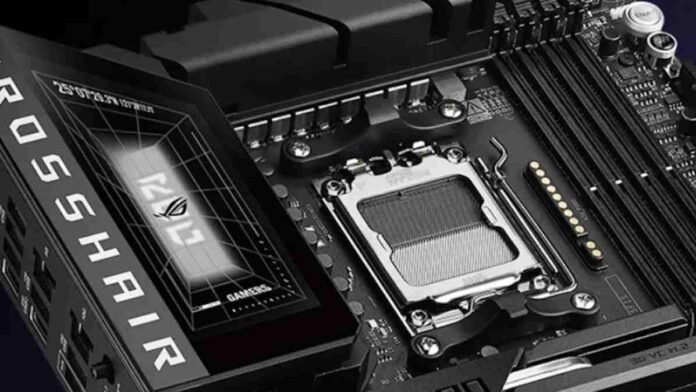
- Asus is investigating reports of Ryzen 9800X3D CPUs failing on its 800 series motherboards
- Many users report systems not booting and showing Q Code 00
- Asus recommends updating to the latest stable BIOS for better stability
- Similar failures previously appeared with other motherboard brands and may involve compatibility issues
Asus has stepped in with an official response after a fresh wave of concerns surfaced online about AMD Ryzen 7 9800X3D processors apparently dying when paired with the company’s 800 series motherboards. The reports have been gathering momentum across enthusiast forums, with multiple users describing systems that suddenly refuse to boot, leaving them staring at a dead machine and a motherboard debug readout that points to a serious fault.
In a statement addressing the situation, Asus confirmed it has launched an immediate internal review into the matter.
The company says it is carrying out preventive checks on compatibility and performance, while also working alongside AMD to validate the cases being reported and to protect long term stability. While it is not a full admission of a confirmed defect, it is a clear sign Asus is taking the chatter seriously rather than brushing it aside as isolated incidents.
That matters, because for users who have experienced this issue, the outcome is not a minor inconvenience. A CPU that fails outright is a worst case scenario, and the uncertainty around what triggers it makes it even more frustrating.
What users are seeing: dead boots and Q Code 00
The common thread in many of the recent complaints is a failure to POST, with systems showing the infamous Q Code 00. For builders, that number is the kind of thing that instantly drains the excitement out of a new setup. It typically indicates the system is not making it through the earliest stages of initialization, often pointing to CPU related trouble, power delivery problems, or a low level hardware communication failure.
In plain terms, the PC powers on, fans spin, lights may come on, but nothing progresses. No display output. No successful boot. No quick fix. And in the cases being discussed, the Ryzen 9800X3D is sometimes suspected to have been damaged in the process.
Asus is currently advising owners of 800 series boards to update to the latest BIOS as a precaution. That is standard guidance, but it also hints that firmware behavior may be part of the equation. A BIOS update can tighten memory training, adjust voltage behavior, and improve stability across CPU and RAM combinations, especially on cutting edge platforms.
One important point here is to avoid beta BIOS releases unless you genuinely know what you are doing and are prepared for unpredictable results. BIOS updates can solve problems, but experimental builds can just as easily introduce them.
A familiar story for 9800X3D owners
If this all feels like déjà vu, that is because the Ryzen 9800X3D has been tied to similar drama before. Earlier reports heavily involved ASRock motherboards, with owners sharing eerily similar symptoms and sudden failures. Over time, the issue was widely associated with memory compatibility behavior in older BIOS versions, and fixes were rolled out that improved stability.
Even after those fixes, the controversy never fully died. There are still community tracked cases floating around, and the ongoing discussion has left many owners uneasy, especially those investing in premium hardware expecting premium reliability.
What makes the current moment stand out is the apparent uptick in posts involving Asus boards. It does not automatically mean Asus is the root cause, but the volume is high enough to push the company into making a public statement and starting a formal investigation.
Why this might be happening and why it is hard to pin down
The uncomfortable truth is that problems like this can be messy. There may not be a single smoking gun. It could be a mix of factors including BIOS tuning, memory profiles, voltage behavior, edge case hardware tolerances, and the way enthusiasts actually use X3D chips.
The Ryzen 9800X3D sits in a sweet spot for performance focused gamers, and that crowd loves to tweak. Even when users do not consider themselves overclockers, many still enable EXPO memory profiles, run aggressive RAM speeds, or adjust settings that push the platform closer to its limits. That does not mean users are at fault, but it does increase the chance of triggering rare stability issues.
It is also worth noting that other Ryzen 9000 series processors have reportedly been affected in smaller numbers, but the 9800X3D draws the spotlight because it is popular, widely discussed, and commonly paired with high end boards.
For now, Asus’ internal review is the best sign that clearer answers might be on the way. Whether the fix ends up being a BIOS update, revised guidance, or a deeper hardware level change remains to be seen. But at least the issue is no longer confined to forum speculation.
Follow TechBSB For More Updates