
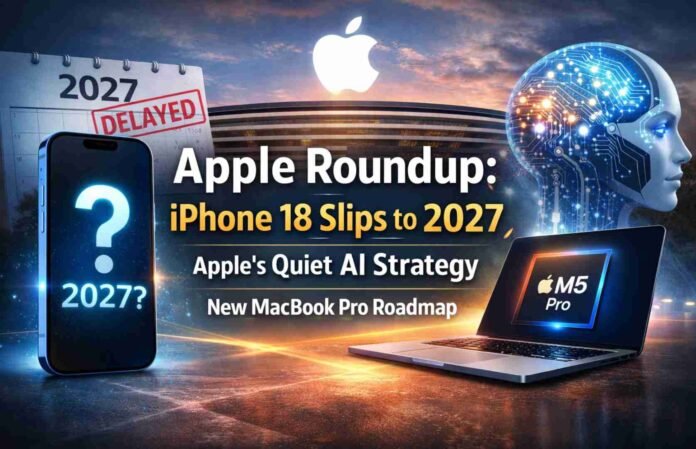
- Apple is reshaping its iPhone launch strategy to favor premium models
- iOS is becoming more open by allowing easier platform switching
- MacBook updates in 2026 focus on performance rather than design
- Apple’s cautious AI approach preserves flexibility and financial strength
Apple enters 2026 in a noticeably different posture. Instead of a predictable cadence of product launches and feature expansions, the company appears to be slowing some things down while quietly reinforcing others.
The headlines of the past week reveal a company that is less interested in keeping pace with competitors and more focused on controlling timing, leverage, and long term positioning.
From a delayed iPhone cycle to an unexpectedly open approach to data portability, Apple is testing ideas that would have been unthinkable a few years ago. None of these moves are loud. None are flashy. But together, they suggest a strategic recalibration that could define the next decade of the company.
The iPhone 18 Delay Signals a Shift in Product Strategy
The most attention grabbing development is the apparent delay of the standard iPhone 18. While Apple is expected to release the iPhone 18 Pro and Pro Max on schedule in the fall of 2026, the base model is now rumored to be held back until early 2027.
This is not simply a supply chain hiccup. It looks intentional.
By giving the Pro models an extended period in the spotlight, Apple reinforces the idea that its flagship experience lives at the premium end. It also allows the company to stretch the lifecycle of its most profitable devices while using the spring launch window to refresh interest with lower priced models.
This staggered release approach mirrors strategies long used in other consumer electronics markets, but it represents a meaningful departure from Apple’s long standing habit of treating all iPhone models as equal participants in a single annual moment. If successful, it could permanently redefine how Apple segments its audience.
Apple Opens the Door to Leaving iOS
Perhaps the most surprising development comes not from hardware, but from software. A forthcoming iOS update introduces a built in system that allows users to move their data directly from an iPhone to an Android device without relying on third party tools.
This is a remarkable shift in philosophy.
Apple has historically relied on friction as a form of loyalty. The difficulty of leaving the ecosystem was never accidental. By officially supporting an exit path, Apple is signaling confidence rather than fear.
The company appears to believe that if users leave, they do so by choice, and if they stay, it will be because the experience is genuinely better.
This move also reflects regulatory pressure and changing consumer expectations. Users now expect portability as a baseline right, not a privilege. By embracing this early and on its own terms, Apple retains control over how openness is implemented rather than having it forced upon the platform later.
MacBooks in 2026 Focus on Refinement Over Reinvention
Looking ahead to the Mac lineup, 2026 appears to be a year of measured evolution. The roadmap points to three clear categories. The MacBook Air continues as the mainstream option. A smaller, more affordable MacBook serves entry level users. The MacBook Pro remains the performance showcase.
The emphasis is not on dramatic redesigns but on internal progress. Faster chips, improved memory performance, and incremental efficiency gains define the upgrades. This reflects confidence in the current industrial design and a belief that raw performance and reliability matter more than novelty at this stage.
Apple’s silicon advantage remains one of its strongest assets, and the company shows no urgency to disrupt what is already working well.
Apple’s AI Strategy Is Defined by Restraint
While competitors race to embed artificial intelligence into every interface and workflow, Apple continues to move cautiously. Its AI features are quieter, narrower, and often less visible. Critics call this lagging behind. Supporters see discipline.
Follow TechBSB For More Updates