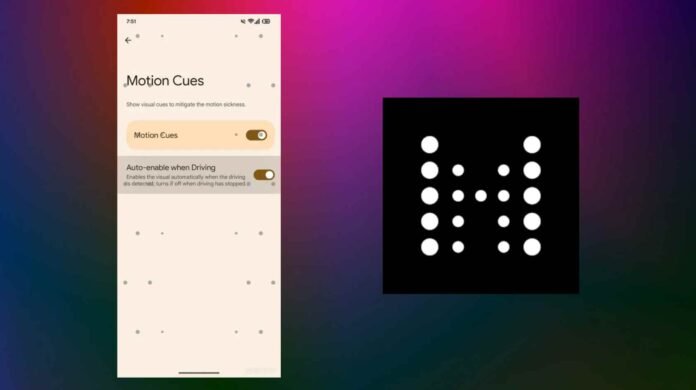
- Android Motion Cues aims to reduce motion sickness by syncing on screen visuals with real world movement
- The feature was delayed due to Android security limits on screen overlays
- Google is now moving Motion Cues into Android’s core system for full screen access
- Android 17 is the most likely release target based on current testing
For more than a year now, Motion Cues has been one of those quietly promising Android features that seemed perpetually stuck behind the curtain.
Spotted early in Google Play Services code and widely expected to launch soon after, it instead slipped into limbo. Now, fresh discoveries suggest that wait may finally be coming to an end, with Android 17 shaping up as the most likely release window.
The renewed evidence comes from ongoing analysis of Android Canary builds, where Google tests features long before they reach public betas.
What is different this time is not just that Motion Cues is still present, but that Google appears to be restructuring where the feature lives within Android itself. That change could be the key to finally making it usable in the real world.
What Motion Cues Actually Does and Why It Matters
Motion sickness from using a phone in a moving vehicle is a well documented issue. Reading messages or browsing maps while riding in a car or bus creates a sensory mismatch.
Your inner ear senses movement, while your eyes are focused on a screen that appears static. For many people, that disconnect leads to nausea, dizziness, or headaches.
Android Motion Cues is designed to reduce that conflict. The feature places small animated dots or markers along the edges of the screen. These dots move in real time, syncing with the physical motion of the device.
When the car accelerates, turns, or brakes, the visual cues shift accordingly, giving your brain a clearer signal that you are in motion.
Apple introduced a similar solution called Vehicle Motion Cues in iOS 18. While not a universal fix, early feedback suggests it genuinely helps a segment of users who struggle with motion sickness.
Android’s implementation aims to work in much the same way, offering a subtle overlay that does not interfere with apps but provides constant motion context.
Why Android Motion Cues Has Been Delayed
The delay has not been about hardware or lack of interest. The problem has been security.
Android places strict limits on which apps and services can draw overlays on top of system interfaces. This is by design. Overlay abuse has historically been used for phishing, fake permission prompts, and other forms of malicious behavior.
As a result, Motion Cues has been unable to display its visual indicators over sensitive areas like Quick Settings, system dialogs, or core configuration menus.
That limitation undermines the entire concept. Motion sickness does not pause when you open system settings. If the dots disappear at critical moments, the feature loses effectiveness.
Recent Canary builds show Google addressing this head on. Instead of treating Motion Cues like a regular service, responsibility is being moved deeper into Android’s core framework.
With that shift comes elevated system level permissions, allowing the motion indicators to appear consistently across the entire interface, including system panels.
This architectural change strongly suggests Google now sees Motion Cues as an accessibility feature that justifies higher trust, similar to screen readers or color correction tools.
Android 17 Looks Like the Natural Launch Window
While Google has not officially confirmed a release timeline, Android 17 is the most logical target. Canary builds exist specifically to test features intended for future platform updates, not minor patches.
Integrating Motion Cues into the operating system itself also aligns with a major version update rather than a mid cycle rollout.
If testing continues smoothly, Motion Cues could be introduced as part of Android 17’s accessibility suite. Expect it to live under Accessibility settings, likely within motion or visual assistance categories, mirroring Apple’s placement on iOS.
It is also worth noting that this feature may be especially relevant for foldables and larger phones, where in car usage is more common.
Google’s renewed focus on in vehicle usability across Maps, Android Auto, and emergency features makes Motion Cues feel like part of a broader strategy rather than a standalone experiment.
Follow TechBSB For More Updates