
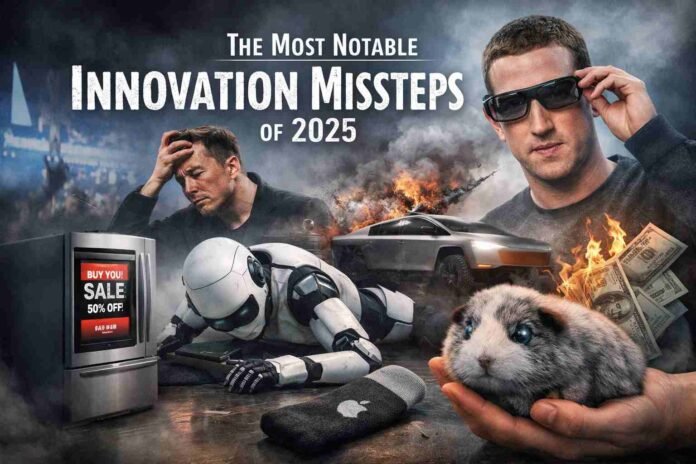
- Public demos exposed how unready many emerging technologies still are
- Consumers rejected ads and monetization inside personal spaces
- Design missteps showed style cannot replace usability
- Leadership decisions directly affected brand trust and performance
Innovation rarely fails quietly. When it goes wrong, it does so on brightly lit stages, in viral videos, and sometimes inside people’s homes. The past year offered a sharp reminder that progress without restraint, testing, or empathy can turn ambition into embarrassment.
As 2025 winds down, several high profile companies learned that lesson the hard way. From humanoid robots collapsing in public to tech executives watching live demos unravel in real time, the year’s failures were not just entertaining.
They were instructive.
What follows is not a list of jokes at innovation’s expense. It is a record of where strategy, judgment, and execution drifted away from real human needs.
When Hardware Meets Reality
Few ideas captured imaginations in 2025 like humanoid robots. The promise was bold. Machines that could move, serve, and even compete alongside people. The reality was far less graceful.
Across multiple public demonstrations, humanoid robots struggled with the most basic expectations.
Balance failed. Motors overheated. Carefully staged demos collapsed into awkward rescues by human handlers. In one widely shared incident, a robot managed only a few steps before toppling forward and being dragged offstage.
Even competitive showcases told a similar story. Robots entered endurance events designed to highlight progress, yet many failed to finish.
While the technical achievement remains impressive on paper, the gap between laboratory success and real world reliability was impossible to ignore.
The lesson was simple. Engineering breakthroughs do not equal readiness. Until robots can withstand unpredictable conditions without supervision, they remain impressive prototypes rather than useful partners.
When Demos Betray the Dream
Wearable technology had its own moment of discomfort. Smart glasses, positioned as the next step toward seamless digital interaction, stumbled during live demonstrations meant to inspire confidence.
In more than one instance, features that worked perfectly in rehearsals failed under real scrutiny. Calls went unanswered. Navigation instructions stalled. Awkward pauses filled rooms that were meant to showcase the future.
These moments mattered because they echoed a deeper issue. The technology was not just imperfect. It was oversold. When devices promise frictionless intelligence but deliver visible confusion, trust erodes quickly.
Consumers are no longer dazzled by ambition alone. They expect reliability first and spectacle second.
Advertising Where It Was Never Invited
Perhaps no misstep angered consumers more than the expansion of advertising into private spaces. In 2025, premium home appliances began displaying ads on built in screens, transforming kitchens into extensions of the digital billboard economy.
The backlash was swift. Owners who paid thousands of dollars for smart appliances were not prepared to accept sponsored content in their homes. Even worse, opting out often meant losing core features altogether.
This move reflected a troubling mindset. Monetization was prioritized over respect. Instead of enhancing user experience, companies attempted to extract ongoing value from customers who believed they had already paid in full.
History has shown that consumers tolerate subscriptions and ads only when they feel fair. In this case, they felt invasive.
Design for Designers, Not for Users
Even companies known for elegance stumbled. Major software redesigns leaned heavily into visual flair while sacrificing clarity. Transparency effects reduced readability. Navigation became more complicated, not less.
At the same time, hardware releases chased novelty over necessity. Ultra thin devices drew attention but failed to deliver consistent performance. Battery life suffered. Durability became a concern. Consumers who upgraded early reported regret rather than delight.
The message was clear. Design should serve people, not impress conference audiences. When aesthetics override usability, loyalty fades.
Artificial Companions and Emotional Overreach
Artificial intelligence also crossed an uncomfortable line in 2025. Devices marketed as companions promised emotional connection, positioning themselves as substitutes for human relationships.
Public reaction was mixed at best. Critics questioned the ethics of selling simulated friendship during a loneliness crisis. Others found the idea unsettling, particularly when devices listened continuously or mimicked emotional responses without genuine understanding.
The discomfort revealed a broader truth. Technology can support human connection, but it cannot replace it. When companies suggest otherwise, they risk alienating the very people they hope to help.
Ego, Power, and Public Fallout
No discussion of 2025’s failures would be complete without addressing leadership. One high profile executive’s foray into public service created ripple effects across multiple industries.
Ambitious restructuring efforts promised massive savings but delivered far less. Legal challenges mounted. Public trust declined. Meanwhile, the executive’s businesses faced protests, vandalism, and declining sales in key markets.
The episode underscored a timeless lesson. Leadership visibility cuts both ways. When personal ideology overshadows corporate responsibility, brands pay the price.
What 2025 Ultimately Taught Us
Innovation is not about speed alone. It is about judgment, humility, and understanding real human behavior. This year proved that technology can fail not because it is too advanced, but because it forgets who it is meant to serve.
Follow TechBSB For More Updates