
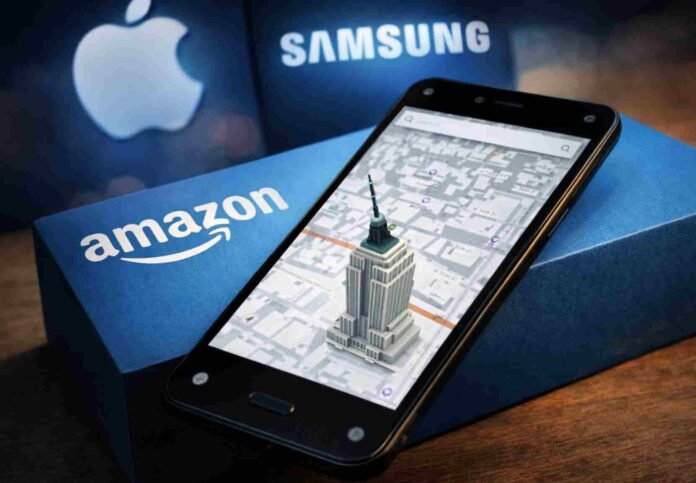
- Amazon is developing a new smartphone project called Transformer focused on AI and personalization
- The device aims to integrate Alexa deeply and reduce reliance on traditional apps
- Past failure of the Fire Phone highlights the challenge of competing with Apple and Samsung
- Amazon is exploring both full smartphones and minimalist devices as part of its strategy
More than a decade after its high profile misstep with the Fire Phone, Amazon appears ready to step back into the smartphone arena. According to people familiar with the matter, the company is working on a new device internally codenamed “Transformer.”
While details remain limited, the ambition behind the project is anything but small. This is not just about launching another handset. It is about reshaping how users interact with Amazon’s ecosystem throughout the day.
The original Fire Phone, launched in 2014 under Jeff Bezos’ direct oversight, failed to gain traction. Despite bold ideas such as 3D visuals and camera driven shopping, the device struggled with poor app support, overheating issues, and a lack of compelling reasons for users to switch. Within just over a year, Amazon pulled the plug, taking a significant financial hit.
This time, the company seems to be taking a more measured and forward looking approach.
A device built around AI and personalization
At the core of Amazon’s new effort is artificial intelligence. The Transformer phone is reportedly being designed as a deeply personalized device that integrates tightly with Alexa and Amazon’s broader services. Instead of relying heavily on traditional apps, the vision leans toward a more fluid, AI driven experience where users can access services without the usual friction of downloads and logins.
Imagine a phone that anticipates your needs. Shopping, streaming, music, and even food ordering could become seamless interactions powered by voice and context awareness. Amazon sees this as an opportunity to extend its reach beyond the home and into every moment of a user’s daily routine.
This direction also reflects a broader shift in the tech industry. Companies are increasingly experimenting with AI native hardware that moves away from app centric interfaces. However, early attempts from competitors have not fared well, highlighting the challenges Amazon will likely face.
Learning from past failures and market realities
Amazon’s earlier smartphone failed not just because of technical issues, but because it lacked a strong ecosystem of apps and developer support. Consumers today are deeply invested in existing platforms, making it difficult for any new entrant to compete.
That challenge remains unchanged. Apple and Samsung continue to dominate global smartphone sales, and user loyalty to their ecosystems is stronger than ever. Convincing people to switch devices will require more than novelty. It will demand a genuinely differentiated experience.
There are also broader market pressures. Smartphone shipments are expected to decline sharply in 2026, driven in part by rising component costs. Entering a shrinking market adds another layer of risk to Amazon’s plans.
Yet the company appears undeterred. Internally, the project is still in development, and there is no confirmed timeline for release. Like many experimental initiatives, it could still be shelved if priorities shift.
A new strategy led by Amazon’s ZeroOne group
The Transformer project is being developed within Amazon’s ZeroOne group, a relatively new division focused on breakthrough devices. The team is led by J Allard, known for his work on Microsoft’s Xbox and Zune. This signals Amazon’s intent to approach hardware innovation with fresh thinking rather than repeating past strategies.
Interestingly, Amazon is also exploring different form factors. Alongside a conventional smartphone, the company has considered a more minimalist “dumbphone” concept inspired by devices like the Light Phone. Such a device would limit distractions while still offering essential features.
This approach could open a niche market. Instead of replacing primary smartphones, Amazon’s device might serve as a secondary companion focused on simplicity and reduced screen time. With growing concerns about digital overload, this angle could resonate with certain users.
The bigger picture
Amazon’s renewed interest in smartphones is not just about hardware. It is about strengthening its position in AI driven consumer experiences. Alexa’s recent evolution suggests the company sees voice and AI as central to its future.
A smartphone, in this context, becomes a gateway. It connects users more deeply to Amazon’s services, data, and ecosystem. If executed well, it could help Amazon compete more effectively in the next phase of personal computing.
Still, the road ahead is uncertain. The company has tried and failed before. The difference now lies in timing, technology, and perhaps a clearer understanding of what users actually want.
Follow TechBSB For More Updates

