
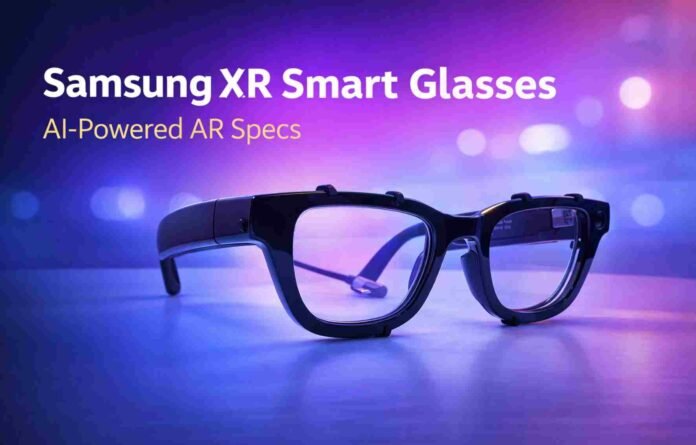
- Samsung is developing XR smart glasses that may launch before the end of 2026
- The glasses are expected to include an eye level camera for AI powered context awareness
- The device will likely connect to a smartphone for processing and battery efficiency
- Samsung is partnering with Google and Qualcomm to build the XR ecosystem
Samsung has once again hinted that its long rumored smart glasses are on the way. According to a senior company executive, the device could arrive before the end of 2026 as the tech industry races to build the next major AI powered gadget.
The conversation around artificial intelligence hardware has shifted rapidly over the past year. Smartphones still dominate, but companies are increasingly exploring smaller wearable devices that can deliver AI assistance in a more natural way. Smart glasses have emerged as one of the most promising options.
Samsung appears ready to join that race. While the company has already shown an XR headset prototype, it is now giving clearer signals that lightweight AI glasses are also in development.
Samsung Executive Teases Upcoming AI Glasses
During a recent interview, Samsung executive Jay Kim acknowledged that many technology companies are now looking for the next device category that can fully take advantage of artificial intelligence. According to him, glasses are an obvious direction.
He explained that tech firms are experimenting with several new device formats, but smart glasses remain one of the most widely discussed ideas. The appeal is simple. Unlike headsets, glasses are lightweight, familiar, and easy to wear throughout the day.
Samsung has already displayed early prototypes of its XR glasses, which combine elements of augmented reality and AI powered assistance. However, the company has remained cautious about revealing specific features.
Even so, Kim confirmed that Samsung is actively preparing a product in this category and that it could launch sometime before the end of the year.
Built Around Cameras and Smartphone Connectivity
One of the most interesting details revealed in the discussion is that the glasses will likely include an eye level camera. This camera would allow the device to understand what the user is looking at in real time.
That capability is critical for AI powered wearables. When the system can see the same environment as the user, it becomes much easier for the assistant to provide contextual information. For example, it could identify landmarks, read signs, translate text, or recognize objects in front of the wearer.
Samsung’s glasses are also expected to rely on a smartphone connection. This approach mirrors how many current smart glasses work. The phone handles heavier computing tasks while the glasses focus on capturing data and delivering quick responses.
Keeping the processing load on a smartphone can also help reduce weight, extend battery life, and make the glasses more comfortable for extended use.
However, Samsung has not confirmed whether the glasses will include a built in display. Some smart glasses projects use small projection displays for notifications and navigation, while others rely entirely on audio feedback through speakers.
For now, that detail remains unclear.
Samsung Teams Up With Google and Qualcomm
Samsung is not building this device alone. The company has partnered with Google and Qualcomm as part of its broader extended reality initiative.
Google is contributing software support, including its Android XR platform, which is designed specifically for mixed reality devices. Qualcomm, meanwhile, is expected to provide the specialized processors that power the glasses.
This collaboration could give Samsung an advantage in the fast growing XR ecosystem. By combining Google’s software with Qualcomm’s hardware expertise, the company may be able to deliver a device that is both powerful and energy efficient.
The partnership also signals that Android based XR devices could become a major competitor to future products from other technology giants.
The Growing Race for AI Wearables
Samsung is entering a field that is becoming increasingly crowded. Smart glasses are attracting attention from several major companies as they search for the next computing platform.
Devices like the latest AI enabled glasses from Meta have already demonstrated that consumers are interested in wearable assistants. These products allow users to capture photos, ask questions, receive information, and interact with AI without pulling out their phones.
Meanwhile, rumors suggest that other tech companies are exploring similar devices, which could intensify competition over the next few years.
For Samsung, the challenge will be creating glasses that feel natural enough to wear daily while still delivering meaningful AI features. If the company succeeds, its XR glasses could become an important step toward a future where computing blends seamlessly into everyday life.
Follow TechBSB For More Updates

