
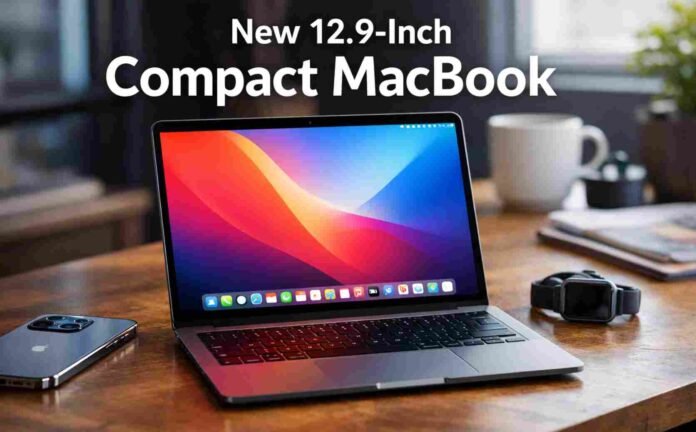
- Apple may launch a 12.9-inch compact MacBook in spring 2026.
- The laptop could use an iPhone-class A18 Pro chip for efficiency.
- It may offer silent operation, long battery life, and lower pricing.
- The device would sit below the MacBook Air in Apple’s lineup.
Apple appears to be reconsidering a product category it once quietly walked away from: the compact MacBook. According to recent industry chatter, the company is working on a new 12.9-inch MacBook that could debut as early as spring 2026.
If the reports hold true, this device would sit below the MacBook Air in Apple’s lineup, targeting users who want a smaller, simpler, and more affordable Mac notebook without giving up modern performance or battery life.
This would not be Apple’s first experiment with compact laptops, but it could be the most practical one yet.
A Smaller MacBook With a Clear Purpose
The rumored 12.9-inch MacBook is expected to feature a display slightly smaller than the current 13.6-inch MacBook Air. Thanks to slimmer bezels, the overall footprint may not feel dramatically different, but the reduced size could make it noticeably easier to carry.
This positions the laptop as a daily companion for students, writers, travelers, and professionals who prioritize portability over raw power.
Apple discontinued its earlier 12-inch MacBook years ago, largely because it struggled with performance and thermal limitations. At the time, the device leaned heavily toward form over function.
This time, the approach appears more balanced. Rather than chasing extreme thinness, Apple seems focused on delivering dependable everyday performance, long battery life, and a price point that opens the Mac ecosystem to more users.
If successful, this MacBook could fill a gap that currently exists between iPads with keyboards and the MacBook Air.
An iPhone Chip at the Heart of the Laptop
One of the most interesting aspects of this rumored MacBook is the processor. Reports suggest Apple may power the device using the A18 Pro chip, the same silicon expected to run the iPhone 16 Pro series.
This would mark a notable shift away from the M-series chips that currently define Apple’s Mac lineup.
At first glance, using an iPhone-class processor in a laptop might sound like a compromise. In reality, Apple’s A-series chips have become remarkably powerful and efficient.
Early estimates indicate strong single-core performance, potentially outperforming older Intel-based MacBooks by a wide margin.
While multi-core performance may not rival newer M-series chips, it could approach the original M1 in lighter workloads such as web browsing, document editing, media consumption, and casual creative tasks.
This choice would also allow Apple to design the laptop without a cooling fan, resulting in silent operation and fewer moving parts. For many users, that trade-off makes sense.
Battery Life, Pricing, and Market Strategy
Battery life could be one of the strongest selling points of this compact MacBook. Since the A18 Pro chip is designed to run efficiently inside a smartphone, scaling it up for laptop use could deliver all-day usage with ease.
For users who spend long hours away from a charger, this could be more valuable than raw performance gains.
Pricing remains unconfirmed, but expectations point toward a starting price below the MacBook Air.
In some markets, the Air already begins around 799 dollars, so a more affordable MacBook could attract first-time buyers, students, and those upgrading from older Intel machines. Lower component costs and a simpler design may help Apple manage pricing even as memory and supply chain costs fluctuate.
Industry analysts also note that the laptop market in 2026 may face pricing pressure due to increased demand for AI-focused hardware.
Introducing a lower-priced MacBook could help Apple remain competitive while expanding its user base. As always, the company has not officially commented, but the strategy aligns with Apple’s broader efforts to segment its product lineup more clearly.
What This Could Mean for Apple Users
If Apple moves forward with this compact MacBook, it would signal a renewed focus on accessibility within the Mac lineup. Rather than replacing the MacBook Air, the new model would likely complement it, offering a lighter, quieter, and more affordable alternative for everyday computing.
For users who do not need heavy multitasking or professional-grade performance, this MacBook could strike an appealing balance between simplicity and capability.
Follow TechBSB For More Updates