
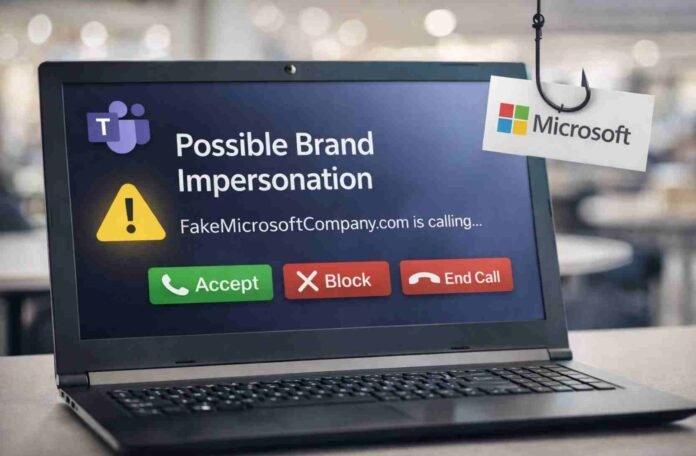
- Microsoft Teams will warn users about possible brand impersonation calls from first time external callers.
- Users will be able to accept, block, or end calls that Teams flags as suspicious.
- The feature is expected to arrive on desktop first, with general availability planned for February 2026.
- It continues Microsoft’s wider effort to reduce social engineering risks in Teams, alongside URL and file scanning protections.
Microsoft Teams is preparing to roll out a new security feature designed to tackle one of the most persistent tricks in the social engineering playbook: brand spoofing. In simple terms, it is when a caller pretends to represent a trusted company or well known organization to pressure employees into sharing sensitive information or taking risky actions.
According to an official Microsoft update, Teams will soon be able to flag suspicious first time external callers who may be impersonating brands that are commonly targeted in phishing campaigns. Instead of leaving users to figure it out after the fact, Teams will surface a warning during the call so employees can make a safer decision in the moment.
This move fits neatly into Microsoft’s broader push to make Teams not just a collaboration hub, but also a safer front door for communication. With more businesses relying on Teams calls for customer conversations, vendor coordination, and remote work check ins, attackers have plenty of opportunities to exploit trust and urgency. Microsoft’s latest update is designed to reduce that risk before it turns into a costly mistake.
Brand Impersonation Protection will flag suspicious callers early
The feature, called Brand Impersonation Protection, focuses on one key scenario: first contact calls from external users. These are often the most dangerous because there is no prior history, no established relationship, and fewer cues to help employees spot suspicious behavior.
When Teams detects signs that an external caller could be impersonating a targeted brand, it will show a warning to the recipient. At that point, the user will have options to accept the call, block the caller, or end the call immediately.
The idea is straightforward but important. Social engineering attacks rarely succeed because of technical skill alone. They succeed because they create pressure and confusion. A timely warning acts as a pause button, giving employees a moment to think before reacting. Even a small interruption can break the attacker’s momentum.
Microsoft is expected to roll out the feature first on desktop versions of Teams, including Mac. General availability is currently planned for February 2026, meaning businesses should have time to prepare internal guidance and awareness messaging before it becomes widespread.
Teams security has been tightening fast and this is the next step
This is not a one off upgrade. Microsoft has been steadily layering security protections into Teams, especially as the platform becomes a more attractive target for attackers.
In recent months, the company has introduced tools aimed at reducing the chance that malicious content can spread through everyday collaboration. One of the major additions was Malicious URL Protection, which scans links shared in chats and channels to identify suspicious destinations before users click through.
Another was Weaponizable File Type Protection, which scans executable files shared in Teams conversations to prevent risky downloads from slipping through unnoticed.
Brand Impersonation Protection follows the same philosophy. Teams is no longer treating security as something that only happens in the background. Instead, it is surfacing warnings at the point of risk, when users are about to take an action that could expose them or the organization.
Microsoft has also signaled that more security improvements are on the way. A notable upcoming feature is support for suspicious call reporting, expected around March 2026. That could make it easier for users to report questionable calls directly, giving security teams better visibility and potentially helping Microsoft refine detection patterns over time.
Why this matters for businesses right now
Brand spoofing is not new, but it is evolving quickly. Attackers are no longer relying only on email. They are moving into chat platforms, voice calls, and collaboration tools where employees are more likely to trust what they see. A call inside Teams can feel legitimate simply because it happens in a familiar work environment.
That is why this update matters. It helps protect employees who may not be trained security experts but are still expected to make rapid decisions all day long. It also reduces the odds of a successful scam reaching deeper into the business, whether that means stolen credentials, fraudulent payments, or compromised accounts.
For IT and security teams, the best approach will be to treat this as an extra layer, not a complete solution. Warnings are useful, but user awareness still matters. Businesses should consider reminding staff how to handle unexpected external calls, verify identities through known channels, and avoid sharing credentials or approving requests under pressure.
Follow TechBSB For More Updates