
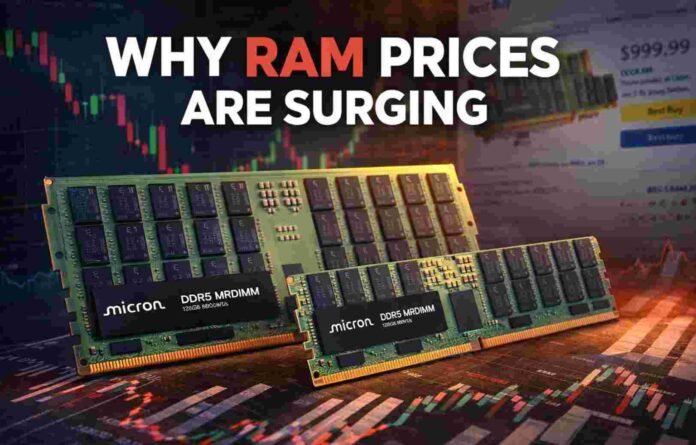
- DRAM supply is dominated by three companies, so pricing moves fast when they shift strategy.
- AI is consuming huge amounts of high end memory, pulling production away from consumer RAM.
- Older RAM is being phased out faster than demand is dropping, so even DDR4 is rising.
- New fabs take years, so prices may stay high longer than people expect.
For years, RAM was the boring part of building a PC. You picked 16GB or 32GB, matched the speed to your motherboard, bought a kit on sale, and moved on with your life. It was predictable, affordable, and rarely the component that ruined your budget.
That calm is gone.
RAM pricing has turned into one of the messiest stories in the hardware world, and the sticker shock is not limited to gamers or enthusiasts. It is hitting laptops, desktops, phones, and even the “cheap and cheerful” devices that used to define value computing. The frustrating part is that the price surge looks simple on the surface, but underneath it is the result of multiple industry shifts happening at once.
Yes, AI is a major driver. But if you blame everything on AI, you miss the bigger problem: memory makers have changed what they want to build, who they want to sell it to, and where the real profits are.
A tiny club controls the memory market
Most people assume RAM is made by dozens of companies competing for your money. In reality, modern DRAM supply is dominated by three giants: Samsung, SK Hynix, and Micron. They feed nearly everything, from desktop DDR5 to laptop LPDDR, graphics card memory, and the high end server modules used in enterprise machines.
That concentration did not feel like a crisis when demand was stable and production was spread evenly. But it becomes a problem the moment priorities shift. When only a few manufacturers control the supply, the whole market moves when they decide to push capacity in a new direction.
And that is exactly what happened.
Before the AI boom reached its current fever pitch, DRAM makers were already trying to move on from older memory standards. DDR4 and LPDDR4 were becoming less attractive to produce. Older process nodes are less profitable, and keeping them alive means sacrificing capacity that could be used for newer, higher margin parts.
So even before AI started swallowing the industry, the “cheap RAM era” was already being dismantled behind the scenes.
AI did not just increase demand, it changed the product mix
Here is the part that matters most: AI demand is not simply “more RAM.” It is a different kind of RAM, built for a different kind of customer.
The biggest AI systems depend heavily on high bandwidth memory, also known as HBM. This is still DRAM, but packaged and stacked to deliver extreme throughput for GPUs. When hyperscalers and AI firms began placing massive orders, memory makers did what any business would do: they followed the money.
HBM and server class DDR5 come with better margins, longer contracts, and predictable volume. Consumer RAM does not. Selling DIMMs into retail channels means fighting price wars, dealing with fluctuating demand, and watching buyers wait for discounts.
So the supply that once kept desktop and laptop RAM affordable has been pulled toward data centers and enterprise builds. That does not mean consumer RAM disappeared, but it did stop being the priority. And once supply tightens, prices do what they always do.
They climb fast.
The consumer market is losing its safety nets
The situation got even uglier once competition started shrinking.
For a long time, consumers benefited from having at least one major manufacturer that played aggressively in retail pricing. When a large player keeps pricing grounded, everyone else has to behave. When that anchor disappears, the whole market floats upward.
Now the consumer space looks thinner, weaker, and more exposed. With manufacturers chasing enterprise margins, retail memory becomes the leftovers of a supply chain designed for someone else.
At the same time, older memory types are not getting cheaper the way they used to. DDR4 should be drifting into budget territory. Instead, it is being squeezed because production is being cut faster than demand is fading. OEMs still need it, industrial systems still rely on it, and plenty of users are still upgrading older machines. Less supply plus steady demand equals rising prices, even for “yesterday’s RAM.”
And the knock on effects are spreading. Graphics cards rely on GDDR memory. Phones use LPDDR. SSDs depend on NAND, which is also being pulled toward enterprise needs. When the memory ecosystem tightens, it rarely stays contained to one product.
What happens next and why relief may take time
The obvious fix is more production. But DRAM fabs are not quick builds. They cost billions, take years, and require long term confidence that demand will still exist when the new capacity comes online.
The other potential relief comes from demand cooling. If AI spending slows or the economics shift, the pressure could ease. Memory markets have always been cyclical, and booms often end with painful corrections.
But counting on that is risky. Right now, the industry is rewarding memory makers for prioritizing AI and enterprise customers. That is where the profits are, and it is where the contracts are.
So the uncomfortable truth is this: RAM is not expensive because everyone suddenly needs more at home. It is expensive because the same factories that used to feed consumers are now feeding the most cash rich customers in tech.
RAM has gone from commodity to constraint, and until supply, incentives, and production priorities change, it is not likely to feel normal again.
Follow TechBSB For More Updates