
- AI demand has caused a severe global memory chip shortage
- RAM prices have risen up to 300 percent since mid 2025
- Tech giants are negotiating directly in South Korea to secure supply
- Higher memory costs may affect future device pricing and features
The global race for memory chips has entered unfamiliar territory. As demand from artificial intelligence systems stretches supply to the limit, some of the world’s largest technology companies are abandoning boardrooms and video calls for a more hands on approach.
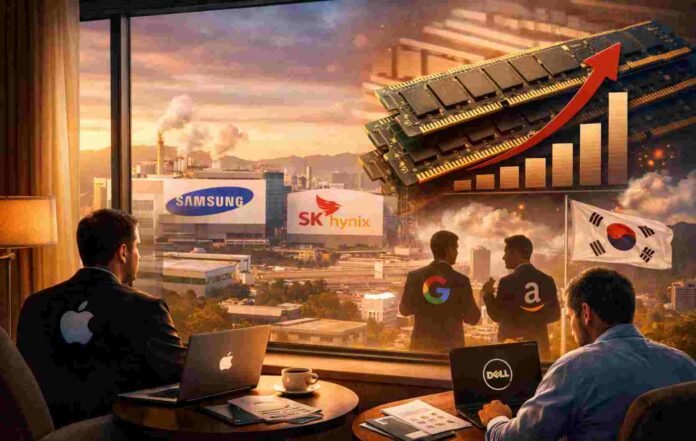
Executives from Apple, Dell, Google and Amazon are spending weeks and even months in South Korean hotels, positioning themselves close to memory chip factories in a bid to secure supply before prices climb even higher.
This is not corporate theatre. It is a direct response to a deepening shortage of memory chips that are essential for everything from smartphones to cloud servers. What was once a predictable component market has become one of the most contested battlegrounds in the global tech supply chain.
Why Memory Chips Have Become So Scarce
At the heart of the issue is RAM, the working memory that allows devices and servers to perform smoothly. Since mid 2025, RAM prices have risen dramatically, in some cases by as much as 300 percent.
For companies that ship hundreds of millions of devices or operate massive data centers, even small price changes translate into billions of dollars in added costs.
The primary driver is artificial intelligence. Modern AI systems require enormous amounts of memory, particularly advanced forms such as high bandwidth memory. These chips are produced by stacking multiple DRAM layers, a complex and capacity intensive process.
As AI accelerators become more powerful, they consume more memory per unit, locking up manufacturing capacity that once served smartphones, laptops, and enterprise servers.
With factories prioritising AI-focused memory, supplies of standard RAM have tightened. This imbalance has pushed prices sharply upward and created uncertainty for manufacturers planning products months or years in advance.
South Korea Becomes the Center of Negotiations
South Korea sits at the centre of the global memory industry. It is home to the two largest memory manufacturers, whose factories dominate the production of both conventional and advanced memory chips. To gain leverage, major buyers have chosen proximity over distance.
Purchasing teams from leading tech firms have reportedly taken up long-term stays in business hotels near key industrial hubs such as Hwaseong and Pangyo.
By being physically present, these teams aim to build relationships, react quickly to supply changes and negotiate directly with suppliers rather than through intermediaries.
The goal is straightforward. Secure long term contracts that lock in volumes for the next two to three years. However, suppliers are holding firm. Expecting prices to continue rising through 2026 and beyond, they prefer shorter quarterly agreements that allow them to adjust pricing as demand evolves.
This standoff has created an unusual dynamic. Buyers want stability and cost certainty. Suppliers want flexibility and upside. The result is a slow moving negotiation where hotel rooms have become temporary extensions of corporate offices.
What This Means for Devices and Consumers
The ripple effects of the memory shortage extend well beyond corporate balance sheets. Memory now represents a larger share of device manufacturing costs than it did just a few years ago. For smartphone makers, this creates difficult choices.
Companies can absorb the cost increase, raise device prices, or adjust specifications by offering less memory in base models. Each option carries risks. Higher prices may dampen demand. Lower specifications could affect performance and brand perception.
Apple, with its strong margins and tightly integrated software, may be better positioned than most to manage these pressures. Others may find it harder to shield customers from rising costs. Over time, consumers could notice slower upgrade cycles, more expensive devices, or fewer high memory options at lower price points.
Beyond consumer electronics, cloud services and enterprise computing are also affected. Higher memory costs feed into server pricing, which can eventually influence subscription fees for cloud based services and AI powered tools.
A Supply Chain Under Pressure
The sight of executives negotiating from hotel rooms underscores how fragile and interconnected the modern tech supply chain has become. A surge in one sector, in this case artificial intelligence, can rapidly reshape priorities across the entire industry.
Until new manufacturing capacity comes online or demand stabilises, memory chips will remain scarce and expensive.
For now, the battle is being fought quietly in South Korea, one long stay at a time, with outcomes that will shape the next generation of devices and digital services worldwide.
Follow TechBSB For More Updates