
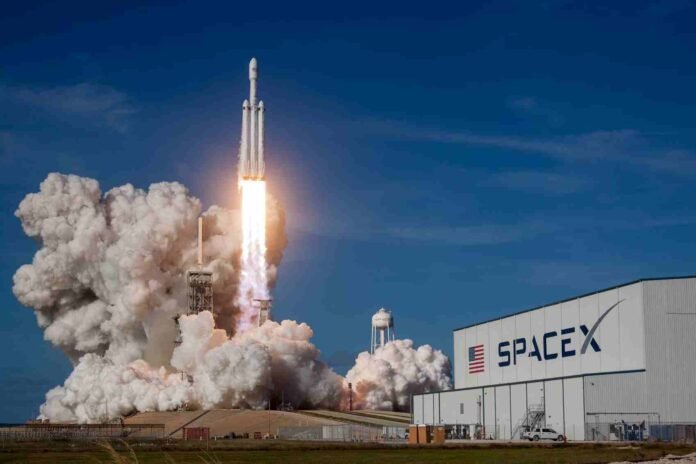
- SpaceX is reportedly preparing for a possible 2026 IPO, which could revive public listings.
- Secondary markets are booming as private firms stay private longer.
- Investors are chasing late stage AI and tech leaders for pre IPO exposure.
- A SpaceX debut could boost both public market confidence and private investing.
Talk of a potential SpaceX IPO in 2026 is stirring fresh optimism across Wall Street after several quiet years for public listings. The company is reportedly engaging four major investment banks, a move many analysts interpret as a meaningful signal rather than idle speculation.
While nothing is official, the possibility alone has already begun influencing investor behavior and activity in private share markets.
At the same time, late stage startups are increasingly turning to secondary markets to provide liquidity for employees and early backers who have waited years to unlock the value of their equity.
According to Greg Martin, managing director at Rainmaker Securities, the shift reflects a broader structural change. High growth companies are staying private longer than ever, yet they are reaching valuations that would once have easily qualified them for the top tier of public markets.
Martin argues that the trend is unlikely to reverse soon. Even if a giant like SpaceX moves into the public arena, investor appetite for private opportunities will probably expand rather than shrink.
Secondary markets are thriving during the IPO slowdown
With fewer companies choosing to list, secondary platforms have become essential financial infrastructure. They allow shareholders to sell existing stock rather than waiting for a traditional exit. This helps founders, executives, and early employees diversify wealth that is often heavily concentrated in company shares.
Demand is not limited to SpaceX. Investors are actively seeking exposure to established private leaders such as OpenAI, Anthropic, Stripe, Databricks, and ByteDance. Many of these businesses are valued in the hundreds of billions, and in some cases even higher, reinforcing the idea that substantial economic value now sits outside public exchanges.
Martin believes a SpaceX IPO could act as a bellwether moment. A successful debut would likely restore confidence in public listings while simultaneously drawing more attention to private markets as investors search for the next breakout candidate.
Why SpaceX may finally consider going public
For years, Elon Musk suggested SpaceX would remain private until missions to Mars became routine. That stance appears to be softening, though Martin cautions against interpreting the shift as a rush. Instead, the timing may simply reflect favorable market conditions and the company’s expanding ambitions.
SpaceX dominates commercial rocket launches, continues to scale its Starlink satellite network, and is exploring new opportunities tied to its Starship program. Concepts such as space based data centers may sound speculative, but they underscore the scale of the company’s long term vision.
Access to public capital could accelerate these projects. Private markets, while deep, cannot match the reach of global public investors. Opening even a small percentage of shares would significantly broaden the pool of available funding.
There are potential complications, particularly around national security and shareholder oversight. However, Martin expects any offering to involve only a modest slice of equity, leaving control firmly in the hands of Musk and a tight leadership circle.
The Musk effect and valuation expectations
SpaceX is widely expected to command a premium valuation, partly due to what some investors call the Musk halo. His track record of building influential companies tends to generate enthusiasm that goes beyond traditional balance sheet analysis.
Still, that confidence comes with risk. Betting heavily on one leader’s ability to repeatedly exceed expectations is not a strategy every investor finds comfortable. Debates around execution, ambitious timelines, and unfinished technologies will likely shape pricing conversations if the IPO proceeds.
Martin suggests that tension is healthy. It forces markets to weigh narrative against measurable performance, ultimately leading to more disciplined valuations.
What investors watch before an IPO
Hiring patterns often reveal a company’s intentions. Bringing in executives with deep public company experience, strengthening investor relations teams, or expanding accounting and legal departments can all signal preparation for life as a listed firm.
That said, companies as mature as SpaceX typically already operate with public grade leadership.
Secondary trading also plays an important role in price discovery. When companies cultivate active private markets ahead of an IPO, they gain a clearer picture of demand and valuation. Without that groundwork, pricing can miss the mark, sometimes resulting in dramatic first day surges that suggest shares were initially undervalued.
How employees access liquidity before listing
SpaceX maintains unusually tight control over its shareholder base, partly to avoid regulatory thresholds that would force earlier disclosure. To manage liquidity, the company conducts tender offers multiple times a year.
Another popular route involves special purpose vehicles, where shareholders pool equity into a structure that sells economic interests rather than the shares themselves. This approach allows ownership exposure to change hands without altering the official cap table.
For investors, information remains the biggest hurdle. Private companies disclose far less than their public counterparts, though brokers often supplement available data with independent research and supply demand analysis.
A market poised for expansion
Rainmaker Securities reports strong activity across roughly two dozen regularly traded private companies, with more expected as confidence returns to the IPO pipeline. The firm handled over $1 billion in secondary transactions last year, underscoring how significant this ecosystem has become.
If SpaceX ultimately lists, it could mark more than just a high profile debut. It may signal the reopening of public markets while simultaneously fueling interest in the private giants waiting in the wings.
Follow TechBSB For More Updates

