
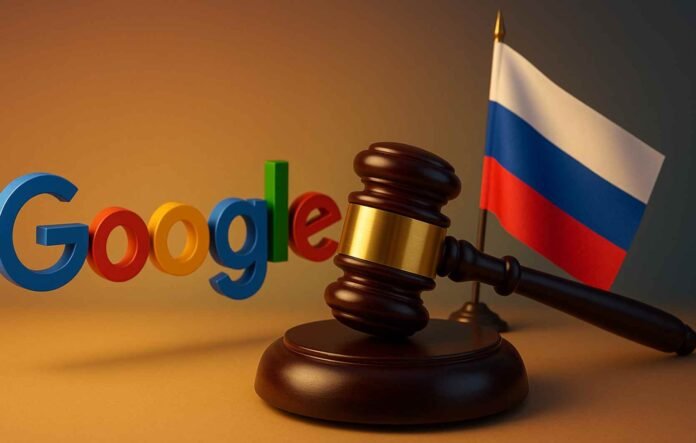
- A Russian court ordered a temporary freeze on about 110 million euros of Google assets in France
- The case centers on an alleged illegal dividend payment made in 2021
- Google can challenge the freeze through French courts
- The move reflects Russia’s broader crackdown on Western tech firms
A Russian arbitration court ruling has opened the door to a temporary freeze on roughly 110 million euros worth of Google owned assets held in France, a move that signals a sharp escalation in Moscow’s legal pressure on Western technology firms.
The decision stems from a long running dispute involving Google’s now defunct Russian subsidiary and an alleged illegal dividend payment made in 2021.
Court documents indicate that the freeze was confirmed through a request by the administrator overseeing Google’s former Russian business.
While Russia has previously relied on regulatory pressure, fines, and access restrictions to rein in foreign tech companies, this action stands out for its use of cross border legal mechanisms to reach assets located in a European Union country.
The ruling has not yet resulted in a permanent seizure. Instead, it functions as a provisional measure that can be challenged in French courts.
Even so, it highlights how geopolitical tensions are increasingly spilling into corporate balance sheets, particularly for companies that once had a major operational footprint in Russia.
The Dividend Dispute Behind the Freeze
At the heart of the case is a payment worth around 10 billion rubles, equivalent to about 110 million euros, which Russian authorities claim was distributed illegally by Google in 2021.
According to the tribunal, the dividend violated Russian corporate or financial regulations that were in force at the time.
Google has not publicly commented in detail on the ruling, though the company no longer conducts business in Russia. Its local operations became effectively impossible in 2022 after Russian authorities froze its bank accounts, following the invasion of Ukraine and the wave of international sanctions that followed.
From Moscow’s perspective, the dividend case provides a legal justification to pursue assets beyond its borders. From the viewpoint of Western companies, however, the move is seen as part of a broader strategy to apply pressure through courts when direct regulatory leverage is no longer available.
Legal experts note that enforcing such rulings abroad is complex and far from guaranteed. French courts will ultimately decide whether the freeze can be upheld under local and European law. That process could take months and may involve appeals at several levels.
A Broader Crackdown on Western Tech
The asset freeze is unfolding against a backdrop of tightening controls on foreign technology companies and digital services in Russia.
Authorities have repeatedly accused US based firms of endangering national security by storing Russian user data outside the country and by allegedly enabling foreign monitoring of domestic businesses.
Google, despite having exited the market, remains a particular target. Officials have openly discussed the possibility of blocking all Google services, framing it as a gradual squeeze rather than an immediate shutdown.
Such a move would further limit access to information, email, cloud services, and other digital tools used by both individuals and organizations.
This pressure is not limited to Google. Russia has stepped up restrictions on popular platforms and communication apps, including FaceTime, Snapchat, and WhatsApp.
At the same time, enforcement against virtual private networks has intensified, making it harder for citizens to bypass censorship or communicate securely with the outside world.
Legal Pressure Meets Digital Isolation
The attempt to freeze Google’s French assets fits into a wider pattern of digital and economic isolation.
Countries engaged in prolonged conflict often tighten control over information flows and foreign businesses, particularly when they face sanctions and diplomatic pushback.
Russian authorities are reportedly exploring similar legal actions in other countries, including Turkey, South Africa, and Spain. While success is uncertain, the effort alone sends a message to multinational companies that exiting the Russian market does not necessarily end legal exposure.
For Google and other Western firms, the case underscores the long tail of geopolitical risk. Decisions made years earlier, when operating conditions were relatively stable, can resurface in hostile legal environments shaped by war and sanctions.
Follow TechBSB For More Updates