
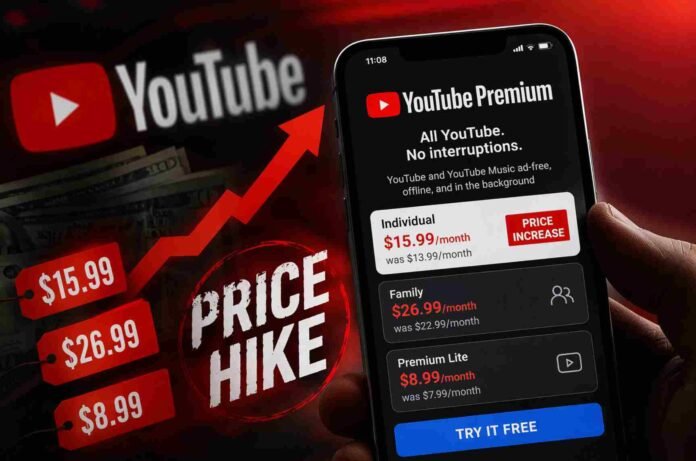
- YouTube Premium prices in the US have increased across all tiers after three years
- Many users were informed late or indirectly, causing frustration and confusion
- Subscribers question value due to lack of original content compared to rivals
- Recent ad controversies add to concerns about Google’s strategy
YouTube Premium subscribers in the US are facing an unexpected shift in their monthly bills, and the reaction has been anything but calm. After nearly three years without a major adjustment, Google has quietly raised prices across its Premium tiers, catching many users off guard and stirring frustration across online communities.
What makes this increase particularly contentious is not just the higher cost, but the way it was communicated. Rather than a clear, upfront announcement, many users first learned about the change through scattered emails, while others discovered it indirectly through discussions on platforms like Reddit. This uneven rollout has only added to the sense that the company mishandled the situation.
The new pricing structure reflects noticeable jumps. The individual Premium plan now costs $15.99 per month, up from $13.99. The Family plan has climbed to $26.99 from $22.99, marking one of the steepest increases. Even the more affordable Premium Lite tier, introduced as a budget friendly option, has risen to $8.99. Meanwhile, YouTube Music Premium now sits at $11.99 monthly.
For many subscribers, this is not just about paying a few extra dollars. It is about trust and perceived value. YouTube Premium has long positioned itself as a convenience based service, offering ad free viewing, offline downloads, and background playback. However, unlike streaming giants that invest heavily in original programming, YouTube relies largely on user generated content. That distinction is becoming harder for subscribers to ignore as prices rise.
Some users have pointed out that platforms like Netflix justify their increases with a steady stream of exclusive shows and films. In contrast, YouTube’s ecosystem is powered by independent creators, raising questions about where the additional revenue is being directed. While Google maintains that the extra income helps improve services and support creators, that explanation has not fully resonated with its audience.
Timing has also played a role in the backlash. The price hike arrives shortly after controversy surrounding reports of longer unskippable ads for free users, particularly on TV apps. Even though Google has downplayed claims of widespread testing, the combination of more intrusive ads and higher Premium costs has fueled speculation. Some believe the company is nudging free users toward paid subscriptions while simultaneously extracting more from existing customers.
The lack of transparency has arguably done the most damage. Subscribers are generally more accepting of price increases when they are clearly explained and tied to visible improvements. In this case, many feel left in the dark, unsure of what exactly they are paying more for. That uncertainty has led to a growing number of users openly considering canceling their subscriptions.
Still, YouTube remains in a strong position. Its platform dominance and vast content library make it difficult to replace entirely. For frequent users, especially those who rely on features like background play or ad free viewing, Premium continues to offer practical benefits. The question is whether those benefits still justify the rising cost.
Follow TechBSB For More Updates