
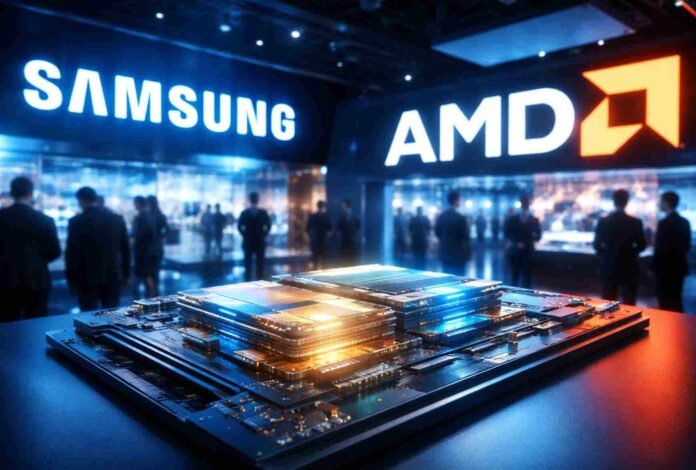
- Samsung will supply HBM4 memory for AMD’s next generation AI accelerators
- Both firms will also collaborate on DDR5 memory for EPYC processors
- A potential foundry partnership could see Samsung manufacture AMD chips
- The deal reflects growing competition and demand in the AI hardware market
Samsung Electronics and Advanced Micro Devices have taken a meaningful step toward strengthening their collaboration in artificial intelligence infrastructure. The two companies have signed a memorandum of understanding that expands their existing relationship around advanced memory technologies and opens the door to a potential foundry partnership.
At the heart of the agreement is Samsung’s next generation high bandwidth memory, known as HBM4. This cutting edge memory will be paired with AMD’s upcoming Instinct MI455X AI accelerators, which are expected to play a key role in future data center and AI workloads. Alongside this, Samsung will also supply optimized DDR5 memory tailored for AMD’s sixth generation EPYC processors, ensuring both companies remain aligned across multiple product categories.
This move signals a broader ambition from both sides. For AMD, it is about securing reliable access to advanced memory as demand for AI computing continues to surge. For Samsung, it is an opportunity to reinforce its position in a highly competitive segment where it has been trying to close the gap with rivals.
Why HBM4 matters more than ever
High bandwidth memory has become one of the most critical components in modern AI systems. Unlike traditional memory, HBM is designed to handle massive amounts of data at extremely high speeds, making it essential for training and running large AI models.
Samsung’s HBM4 is expected to push performance even further, offering improved bandwidth and efficiency compared to earlier generations like HBM3E. AMD has already relied on Samsung’s previous HBM solutions for its MI350X and MI355X accelerators, so this next step feels like a natural progression rather than a sudden shift.
The timing is also notable. Demand for AI hardware is outpacing supply, and memory has become a bottleneck across the industry. By locking in future supply agreements early, AMD is positioning itself to compete more effectively with rivals, while Samsung ensures its technology remains central to next generation AI platforms.
Foundry collaboration could reshape competition
Beyond memory, the agreement hints at something even more significant. The two companies plan to explore a foundry partnership, which could see Samsung manufacturing future AMD chips.
This is a strategic move with long term implications. Foundry services have traditionally been dominated by a small number of players, and Samsung has been working to expand its footprint in this space. A deeper relationship with AMD could help Samsung attract more high profile clients and strengthen its credibility as a contract chip manufacturer.
For AMD, diversifying manufacturing partners could reduce reliance on a single supplier and improve supply chain resilience. In a market where delays and shortages can cost billions, flexibility is becoming just as important as performance.
A growing battle for AI dominance
The partnership also reflects a wider trend across the semiconductor industry. Companies are racing to secure long term deals and partnerships as AI demand reshapes priorities and supply chains.
AMD has already made aggressive moves, including major agreements to supply AI chips to large technology companies over the coming years. These deals underline the scale of demand and the importance of securing every part of the ecosystem, from processors to memory.
Meanwhile, Samsung is working to strengthen its position in the high bandwidth memory market. While it remains the world’s largest memory chipmaker overall, it still trails behind its biggest competitor in the HBM segment. Expanding partnerships like this one is a clear attempt to close that gap and capture a larger share of the fast growing AI market.
The announcement also comes at a time when industry attention is focused on AI hardware innovation, with new products and collaborations being unveiled across the sector. In that context, Samsung and AMD’s agreement feels less like a standalone deal and more like part of a broader shift toward tighter, more strategic alliances.
Follow TechBSB For More Updates