
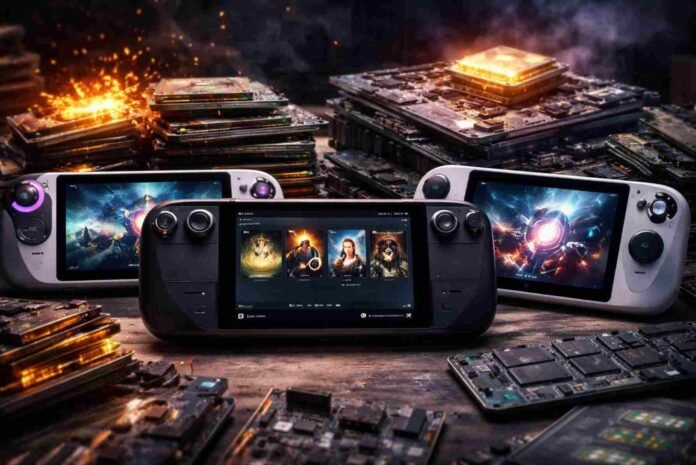
- AI demand is driving up RAM and storage costs, impacting handheld gaming PCs
- Companies like Ayaneo are already delaying or halting product launches
- Even leading devices face supply shortages and production issues
- Rising prices could push handheld gaming PCs out of mainstream appeal
For the last few years, handheld gaming PCs have enjoyed a remarkable run. What started as a bold experiment quickly turned into a thriving niche, largely thanks to Valve’s Steam Deck shaking up expectations in 2022. It proved that portable PC gaming could be accessible, powerful, and reasonably priced.
Naturally, competitors followed. Lenovo, Asus, and Ayaneo stepped in with their own takes, pushing performance boundaries and experimenting with different price tiers.
At first, this growing competition felt like a win for gamers. More options, better specs, and steady innovation created a healthy ecosystem. Even when some devices leaned toward the expensive side, there was still a sense that the category was moving forward. But that momentum is now starting to falter and not because of a lack of interest or creativity.
The silent pressure from AI demand
The real disruption comes from somewhere unexpected. The ongoing AI boom is reshaping the global semiconductor landscape, and handheld gaming PCs are caught in the crossfire. Memory and storage components, especially RAM and SSDs, are becoming more expensive and harder to secure. These are not minor cost increases either. They are significant enough to alter product strategies and delay launches.
Companies building handheld gaming PCs rely heavily on these components to deliver smooth performance in compact form factors. When prices spike, margins shrink fast. Unlike larger laptop or desktop segments, handhelds operate in a tighter pricing window. Push too high, and consumers walk away.
That is exactly the pressure manufacturers are now facing. The AI industry is consuming vast amounts of memory resources, leaving fewer supplies for consumer electronics. As demand surges, prices follow, and smaller hardware categories like handheld gaming devices feel the impact first.
Early warning signs from the industry
The cracks are already visible. Ayaneo’s situation is perhaps the clearest example. The company had plans lined up for its Next 2 handheld, with pre orders open and shipments scheduled. Then everything stalled. Sales were halted as rising component costs made the product financially unsustainable.
This is not just about one niche brand struggling. It highlights a broader issue. If a company focused entirely on handheld innovation cannot maintain profitability, it raises serious questions about the category’s future.
Even Valve, arguably the strongest player in this space, is not immune. Reports of intermittent stock shortages for the Steam Deck OLED point directly to supply constraints. Memory and storage availability are becoming unpredictable, making it harder to maintain consistent production.
When a market leader starts facing these issues, it signals a deeper structural problem rather than a temporary hiccup.
A category at risk of pricing itself out
The biggest concern is not just supply shortages. It is what those shortages lead to. Higher production costs inevitably translate into higher retail prices. That is where handheld gaming PCs face a critical challenge.
These devices were never meant to compete directly with full desktop setups in terms of price. Their appeal lies in offering a balance between portability and affordability. Once that balance is lost, the value proposition weakens.
Consumers are unlikely to spend desktop level money on a handheld device, no matter how powerful it is. If manufacturers are forced to raise prices significantly, demand could drop quickly. That would shrink the market and discourage further innovation.
In the worst case, handheld gaming PCs could retreat back into a niche segment instead of continuing their path toward mainstream adoption.
What happens next
This situation is still evolving, but the direction is clear. The AI driven demand for memory is not slowing down anytime soon. If anything, it is expected to grow even further. That means continued pressure on component pricing and availability.
For handheld gaming PCs to survive and thrive, manufacturers may need to rethink their strategies. That could involve optimizing hardware requirements, exploring alternative components, or finding new ways to control costs without sacrificing performance.
There is still strong interest from gamers, and the concept itself remains compelling. But unless the supply chain stabilizes, the category could face a difficult period ahead.
Follow TechBSB For More Updates