
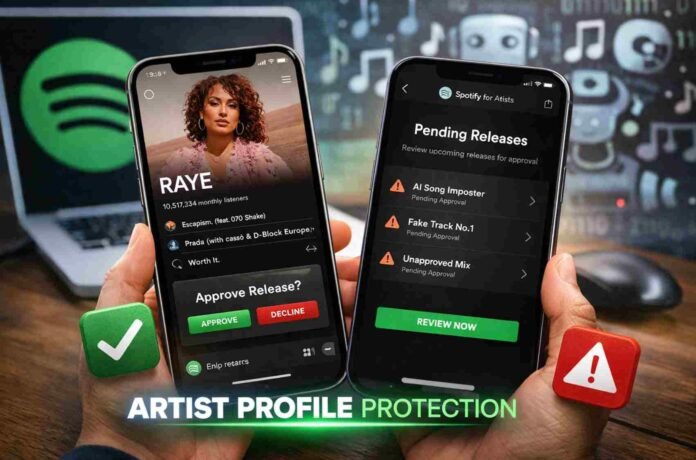
- Spotify introduces Artist Profile Protection to prevent fake and AI generated music uploads
- Artists can approve or reject releases before they appear on their profile
- A unique artist key allows trusted releases to bypass manual review
- The feature aims to reduce fraud, catalog errors, and improve listener trust
Spotify is taking a meaningful step to address one of the most frustrating problems in modern music streaming: fake releases and AI impersonation. With the rise of easy-to-generate tracks, artists have increasingly found music appearing under their names without consent. This has not only confused listeners but also raised concerns about lost royalties and damaged reputations.
The company’s new feature, Artist Profile Protection, is designed to tackle exactly that. Rolling out in beta, it introduces a review system that allows musicians to approve or reject music before it shows up on their official Spotify profile. It is a notable shift in how the platform handles artist identity and content verification, moving from reactive moderation to proactive control.
Spotify has faced growing criticism from users who feel overwhelmed by low quality or AI generated content showing up in recommendations like Discover Weekly. This update signals that the company is beginning to take those concerns more seriously, especially as AI tools continue to blur the line between authentic and synthetic music.
How the approval system works in practice
Artist Profile Protection is optional, but once enabled, it fundamentally changes how releases are handled. When new music is submitted under an artist’s name, Spotify sends a notification prompting them to review it. At that point, the artist can either approve or decline the release.
If approved, the track goes live as normal and contributes to the artist’s catalog, stats, and algorithmic reach. If rejected or ignored, it will not appear on their profile. However, it may still be distributed on other platforms, which means artists may still need to follow up with distributors if something suspicious appears.
To streamline trusted collaborations, Spotify has introduced something called an artist key. This is a unique identifier that artists can share with approved distributors or partners. Any release submitted with this key bypasses manual review and is automatically approved, ensuring that legitimate releases are not delayed.
This balance between control and convenience is important. It protects artists from unauthorized uploads while keeping the workflow smooth for official releases.
Why this matters in the age of AI music
The timing of this feature is not accidental. AI-generated music has exploded in recent years, making it easier than ever to create convincing tracks that mimic real artists. Fraudsters have exploited this by uploading fake songs under popular artist names, collecting streams and revenue before anyone notices.
Until now, Spotify’s approach has relied heavily on reporting systems. Artists and listeners could flag suspicious content, but the damage was often already done. Artist Profile Protection changes that dynamic by stopping problematic releases before they go live on an artist’s page.
It also addresses a long-standing issue that predates AI: simple catalog mix-ups. Artists with similar names have frequently found their music incorrectly grouped together. This new system adds a layer of verification that should reduce those errors significantly.
At the same time, it is worth noting what this feature does not do. It does not eliminate AI generated music from Spotify entirely. Instead, it focuses on identity protection, ensuring that artists are not misrepresented or exploited.
A step toward rebuilding listener trust
For listeners, the impact could be just as important. Recommendation systems like Discover Weekly and Release Radar rely heavily on an artist’s catalog. When fake or low quality tracks slip in, it affects not just the artist but also the listener experience.
By ensuring that only approved music appears under an artist’s name, Spotify is aiming to clean up those recommendation pipelines. In theory, this should lead to more reliable suggestions and a stronger sense of trust in what users are hearing.
There is also a broader reputational angle. As streaming platforms compete, transparency and authenticity are becoming key differentiators. Spotify’s approach places responsibility directly in the hands of artists rather than relying on labels or distributors alone.
While it is still early days for the feature, Artist Profile Protection represents a clear acknowledgment of the challenges posed by AI driven content. It may not solve everything overnight, but it is a practical and overdue step in the right direction.
Follow TechBSB For More Updates