
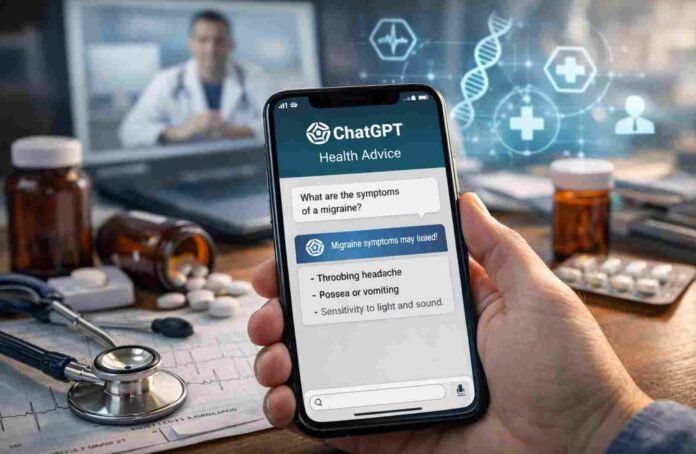
- ChatGPT is now widely used for everyday health questions
- People value AI for clarity, availability, and explanation
- AI can support but not replace medical professionals
- Trust and caution must exist side by side
OpenAI’s latest report makes a striking claim. Around 40 million people use ChatGPT every single day to ask health related questions. That figure alone says a lot about how people now seek reassurance, clarity, and direction when their bodies do something unexpected.
A few years ago, most of us typed symptoms into a search engine and braced ourselves for worst case scenarios.
Today, many skip straight to a conversational AI. People ask about headaches that will not go away, medication side effects that feel alarming, or diagnoses explained in language that actually makes sense.
According to OpenAI, more than five percent of all ChatGPT prompts are about health, and roughly 200 million users ask at least one health question each week.
That scale is not just impressive. It signals a shift in trust and habit. AI is no longer just a productivity tool or a novelty. For many, it has become part of their personal health routine.
How People Are Using AI for Health Decisions
The report draws on a survey of over one thousand adults in the United States who used AI for healthcare questions in the past three months. Their answers paint a clear picture of what people want from tools like ChatGPT.
More than half used it to check or explore symptoms. Just over half said they relied on AI because it is available at any hour, especially when clinics are closed or appointments are weeks away. Nearly half used it to understand medical terms or instructions, while a similar number asked about treatment options.
What stands out here is intent. Most users are not looking for a final diagnosis. They are trying to organize information, translate jargon, and prepare better questions for real doctors. In other words, they are using AI as a guide through a confusing system rather than a replacement for it.
One example shared in the report describes a woman coordinating urgent care for her mother overseas after sudden vision loss. By entering symptoms and prior advice, she received a warning that the situation could signal a hypertensive crisis or stroke.
Her mother was hospitalized and later recovered most of her vision. Stories like this help explain why people see AI as helpful rather than reckless.
The Real Benefits and the Real Risks
There is a strong argument for AI as a healthcare ally. It never sleeps, it does not rush you, and it can explain the same thing ten different ways until it clicks.
In countries where seeing a doctor is expensive or slow, that matters. For minor concerns, AI can offer peace of mind or prompt someone to seek help sooner rather than later.
But the risks are just as real. A chatbot does not know your full medical history. It cannot examine you. It can misunderstand context or give advice that sounds confident but is wrong. Taking its words as medical truth is where things get dangerous.
OpenAI says it is working with hospitals and researchers to improve safety and accuracy, yet even the best system will make mistakes. The danger lies not in asking questions, but in trusting the answers too much.
This concern feels sharper now than it did in the era of search engines. Google results once pushed authoritative sources to the top. AI generated responses blend information and interpretation, which can blur the line between fact and speculation.
A Tool We Are Already Using, Ready or Not
Whether we are comfortable with it or not, millions of people have already decided that AI belongs in their health conversations. That does not mean it should replace doctors. It does mean the healthcare world needs to acknowledge reality.
Used wisely, AI can help people understand their bodies better, reduce anxiety, and navigate systems that often feel hostile or opaque. Used carelessly, it can mislead and delay proper treatment.
The challenge ahead is not stopping people from asking AI about their health. That ship has sailed. The real task is teaching people how to use it responsibly, as a starting point, not a final authority.
Follow TechBSB For More Updates