
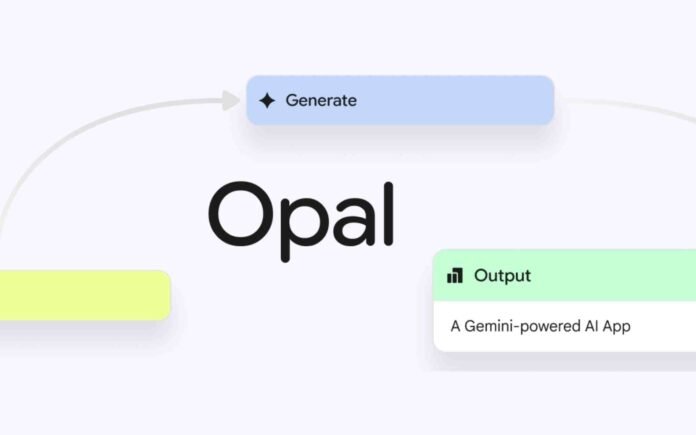
- Google has integrated its Opal app building tool directly into the Gemini web experience
- Opal allows users to create AI powered mini apps using natural language and visual steps
- The tool supports both beginners and advanced users through layered editing options
- This move reflects the growing popularity of vibe coding and no code development
Google is taking another deliberate step toward making software creation accessible to everyday users, not just engineers.
The company has announced that Opal, its experimental “vibe-coding” tool for building AI-powered mini apps, is now integrated directly into the Gemini web experience.
This move signals more than a simple feature update. It reflects Google’s broader strategy to turn Gemini into a practical workspace where users can think, build, and ship ideas without needing traditional programming skills.
By embedding Opal inside Gemini, Google is lowering the barrier between having an idea and turning it into something functional.
From Customized Assistants to Build-Your-Own Apps
Opal connects tightly with Gems, Google’s name for customized versions of Gemini that are tailored for specific tasks. Gems debuted in 2024 as a way for users to shape Gemini’s behavior for roles like learning coach, brainstorming partner, career advisor, editor, or coding assistant. Until now, Gems were mostly about configuring how Gemini responds.
Opal expands that idea into something far more tangible. Instead of just tuning an assistant’s personality or focus, users can now create small, purpose-built apps that perform workflows.
These mini apps can combine prompts, logic, and AI models into a repeatable tool that behaves the same way every time it runs.
The process starts with plain language. Users describe what they want the app to do, and Gemini’s underlying models interpret that description into a structured flow.
There is no requirement to understand syntax, APIs, or frameworks. The goal is to make app creation feel closer to sketching out an idea than writing software.
A Visual Editor Designed for Non-Developers
One of Opal’s defining features is its visual editor, which now lives inside Gemini’s Gems manager on the web. The editor lays out each step of an app as a block in a sequence, making the logic visible at a glance. Users can reorder steps, connect them, or remove them entirely using simple controls.
Google has also introduced a new view that automatically translates written prompts into a step by step outline.
This helps users see how their instructions are being interpreted, which is especially useful for refining or troubleshooting an app’s behavior. Instead of guessing what the system is doing, users can inspect and adjust it visually.
For people who want deeper control, Google allows a smooth transition from Gemini into Opal’s Advanced Editor. This environment offers more granular customization without forcing users to abandon the no code approach entirely. Once created, mini apps can be saved and reused, turning one off ideas into durable tools.
Vibe Coding Moves Closer to the Mainstream
The rise of “vibe-coding” has been one of the most notable shifts in software creation over the last few years. The concept emphasizes intent over implementation. Users focus on what they want to achieve, and AI systems handle the mechanics of how it gets built.
This space has quickly filled with startups and established players alike. Developer focused tools and consumer friendly builders have shown that there is real demand for creating software without traditional coding.
Google’s decision to bring Opal into Gemini suggests it sees this trend not as a niche, but as a core part of how people will interact with AI going forward.
What makes Google’s approach distinctive is the integration. Rather than positioning Opal as a separate product, the company is folding it into Gemini itself.
That means ideation, execution, and iteration all happen in one place. For users, this reduces friction and reinforces Gemini’s role as a central AI hub rather than a standalone chatbot.
In practical terms, this could change how small teams, educators, and individuals solve problems. Instead of searching for the right app or commissioning custom software, users can create narrowly focused tools on demand. Over time, this kind of flexibility may reshape expectations around what AI assistants are supposed to do.
Follow TechBSB For More Updates