
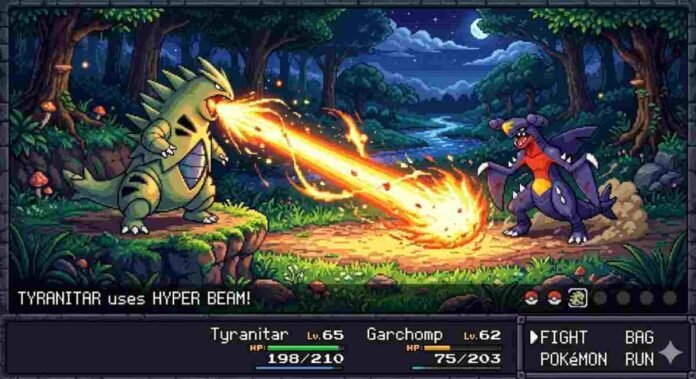
- AI tools can recreate classic Game Boy style Pokémon battle scenes with modern detail
- Simple prompts generate nostalgic pixel art battles inspired by early Pokémon games
- Users can change locations and generate new matchups between classic Pokémon
- The same concept works with original characters or even famous literary figures
If you grew up holding a Game Boy in both hands, you probably remember the thrill of those early Pokémon battles. The screen was tiny, the graphics were blocky, and the characters were built from just a handful of pixels. Yet at the time, it felt like magic. Watching your starter Pokémon face off against a wild opponent was enough to keep players hooked for hours.
Those battle scenes may look primitive today, but they remain iconic. They capture a specific moment in gaming history when imagination filled the gaps that technology could not yet handle.
Now, modern AI tools are making it possible to revisit those memories in a new way. Instead of simply replaying the original games, you can recreate the same battle scenes with far richer detail. The result feels like discovering an alternate version of the classic games that never actually existed.
Turning Pixel Memories into Detailed Battle Scenes
One of the newest image generation tools makes this surprisingly easy. By giving the AI a simple prompt inspired by the classic Pokémon battle screen, you can generate a completely new interpretation of that familiar layout.
The idea is simple. You ask the AI to create a scene inspired by a Game Boy era Pokémon battle but rendered with beautiful pixel art and minimal interface elements. Instead of the flat backgrounds and limited animation of the original games, the AI produces an upgraded version of the moment. The style remains nostalgic, but the level of detail is dramatically improved.
The result often looks like something that might have appeared on a more powerful console from the same era. Imagine the familiar battle layout but with richer environments, sharper pixel art, and more expressive character poses.
It captures the spirit of the old games without copying them exactly. In many ways, it feels like a “what if” scenario for retro gaming history.
Creating New Battles with Classic Pokémon
Once the initial scene is generated, you can continue modifying it through additional prompts. For example, you can ask the AI to change the location of the battle and place two different Pokémon into the scene.
This allows you to recreate matchups that players might remember from their childhood games. A fiery clash between Charizard and Arcanine, for instance, can suddenly appear in a stylized pixel arena that looks far more elaborate than anything the original hardware could produce.
What makes this particularly fun is the element of randomness. By requesting two Pokémon from the Kanto generation, the AI may generate unexpected pairings that feel fresh while still rooted in the early era of the franchise.
Even though the scenes are AI generated, they still carry the recognizable structure of classic Pokémon battles. The perspective, the positioning of the characters, and the simple interface cues evoke the same feeling players experienced decades ago.
Beyond Pokémon: Imagining Entirely New Battle Worlds
The concept does not have to stop with Pokémon characters. Once you start experimenting with prompts, the possibilities quickly expand.
You can ask the AI to create battles between original characters such as fictional superheroes. This keeps the nostalgic battle format while introducing completely new fighters. Suddenly the classic battle screen becomes a stage for characters that never existed in the original games.
Another creative twist is to place literary figures into the battle format. Characters from classic novels can appear facing off in a retro style combat screen. Imagining dramatic matchups between well known literary personalities adds a humorous and unexpected dimension to the experiment.
In many ways, the tool becomes less about recreating Pokémon and more about exploring how a classic game interface can inspire new kinds of storytelling.
The old Game Boy battle screen becomes a creative template. Instead of simply remembering the past, players can imagine entirely new games that might have existed if developers had taken the concept in different directions.
Why Nostalgia and AI Work So Well Together
Retro gaming nostalgia remains powerful because it connects players to a particular time in their lives. The simplicity of early graphics often leaves space for imagination. AI image generators tap directly into that feeling by rebuilding those memories with modern visual tools.
What makes this approach compelling is that it does not erase the charm of the original games. Instead, it celebrates their design while showing how they might look with today’s technology.
For longtime fans, it is a chance to revisit familiar scenes from childhood with a fresh perspective. For younger players, it offers a glimpse into why those early games captured so many imaginations in the first place.
Sometimes the best way to appreciate gaming history is not by leaving it untouched but by reimagining it.
Follow TechBSB For More Updates